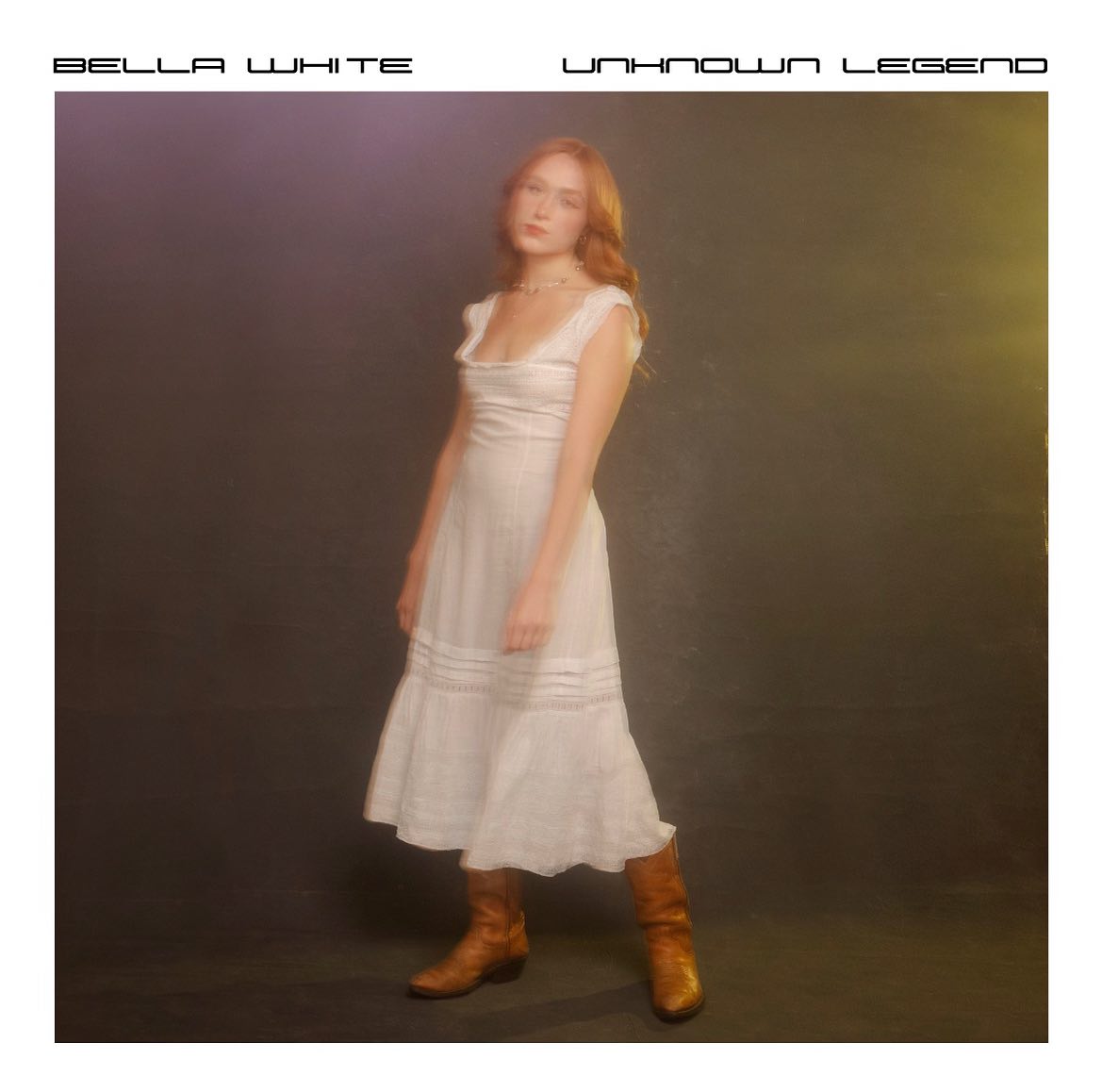
Adulthood brings with it responsibilities and even sacrifice, of foreswearing one’s dreams and facing reality head-on. Neil Young’s “Unknown Legend,” covered to empathetic perfection by twang-tinged folkie Bella White, paints a multi-hued portrait of a woman who’s doing just that. The first verse shows the woman as a diner waitress accustomed to moving on, a lesson she learned from her itinerant father. (“Daddy always kept moving so she did, too.”) The chorus expands upon the scene, digging into escape literal and figurative: “Somewhere on a desert highway/She rides a Harley-Davidson/Her long blonde hair flyin’ in the wind….”
“She’s been running half her life,” the song tells us, though she doesn’t know what from. Yet an image shows the internal conflict that’s pushing her forth, with “[t]he chrome and steel she rides/Colliding with the very air she breathes.”
The second verse presents the poignant picture of the “unknown legend of her time” dressing her children when a far-away look fills her eyes. Literal escape is no longer an option, so she flees the drudgery via memories of her motorcycle.
That’s it, that’s the song: two verses and a chorus that floats through like the waitress herself after each verse (and once more at the end). And yet it’s as fully formed a poetic portrait as anything penned by T.S. Eliot, albeit one that’s (thankfully) less verbose. In the original version on the Harvest Moon album, it’s evident from Young’s delivery that he has much sympathy for the waitress; giving up or pushing off one’s dreams, whatever they are, may be seen as an inconsequential thing to some, but not him. (He is just a dreamer, after all.)
It’s been said that the song was written during or after the Comes a Time sessions, with a multitude of inspirations—some point to Neil’s first wife, Susan, who owned a restaurant, while others say his second wife, Pegi, who had long blonde hair and worked as a waitress at a diner near his home. Neil himself said it was inspired by people he knew and people he didn’t, and that the idea driving the song is to never relinquish one’s dreams even when adulthood attempts to curtail them.
Too, there’s this: Throughout history, due to societal’s unwritten rules and expectations, women have pushed their dreams onto the back burner at a clip far higher than men. (Motherhood has a way of re-ordering one’s priorities, after all.) Perhaps because of the unlikely subject, the song has radiated far beyond its album-track status. It wasn’t released as a single, for instance, yet managed to reach No. 38 on Billboard’s Mainstream Rock Tracks chart—and, in time, was deemed by many critics to be one of Neil’s best songs.
In any event, Bella White ably captures the song’s magic. Give it a listen.
 The Old Grey Cat
3 thoughts