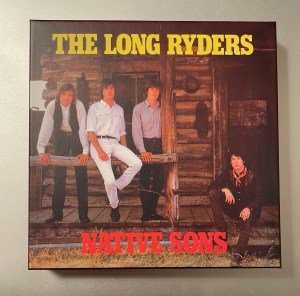
Ghostlier demarcations and keener sounds glide through the grooves of Native Sons, the 1984 full-length debut from the Long Ryders, a Los Angeles band that helped build the sonic bridge that connected Gram Parsons to Uncle Tupelo and the music genre now known as Americana. Taut rhythms, glissando guitars and close harmonies accent the goings-on, which conjure the hullabaloo of 20 years before when the Byrds first matched folk music to the Merseybeat. But just as the Byrds soon embraced the country ethos via Chris Hillman’s Younger Than Yesterday contributions, so too do the Ryders here. They toss in cheeky humor and a punk vibe for good measure.
They were not the “angel-headed hipsters burning for the ancient heavenly connection to the starry dynamo” of their era, in other words, though it would have been cool if they were. If Bob Dylan was akin to Beat poet Allen Ginsberg in the early and mid-1960s, the Byrds were Beats once removed and Buffalo Springfield, with their more straight-ahead attack, Beats not at all, though indebted to them. The Ryders hail from that school. Call ‘em the James Wright(s) of folk ’n’ roll, mining universal truths in a plain-spoken style.
In any event, by 1984 the band consisted of guitarists Sid Griffin and Stephen McCarthy, bassist Tom Stevens, and drummer Greg Sowders. Griffin was the leader, though they all were. (Tom Stevens passed away in early 2021, but the band is still going strong. See last year’s September November for proof of that.) Recorded at A&M Studios in L.A. throughout the summer of ’84, while the Olympics provided a jingoistic backdrop to the Reagan Revolution just a few miles up the road, Native Sons was a breath of fresh air at a time when the top of the charts was increasingly oxygen-deprived.
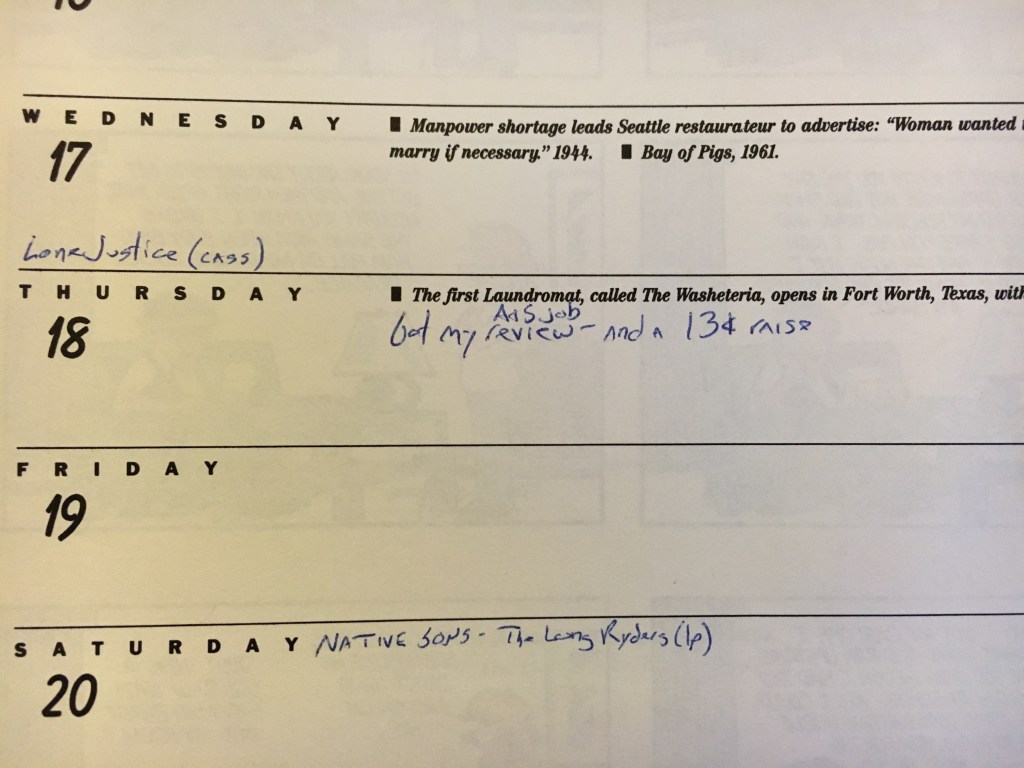
I frequently wrote of the impact that the Long Ryders and Lone Justice had on me in the mid-1980s in the early years of this blog, when I mixed music and memories far more often than I do now. I purchased Native Sons not in October 1984, when it was released, but on April 20, 1985, a mere three days after picking up Lone Justice’s self-titled debut and two months after taking in the “20th Anniversary Celebration of the Byrds” concert at the Tower Theater, where Gene Clark, Rick Roberts and others brought the house down song after song after song. I was 19. Both albums were stylistic amalgamations that made the old new again and, too, injected ample amounts of humanity into their grooves.
The Long Ryders also celebrate music’s oft-ignored history on the album, something that music fans should appreciate. One example is the Native Sons lead-off track, “Final Wild Son,” which pays tribute to Jerry Lee Lewis. “Ivory Tower,” written by the band’s former bassist, Barry Shank, honors the Byrds, who they were often compared to, and in a coup of sorts Gene Clark is on hand to provide harmonies.
The country vibe comes in with a cool cover of Mel Tillis’s “(Sweet) Mental Revenge,” which they based on a Flying Burrito Brothers rendition that Griffin heard on a bootleg, and the fun “Never Got to Meet the Mom.” “Too Close to the Light,” on the other hand, delves into soft psychedelia in a delightful way, while Stephen McCarthy’s “I Had a Dream” is a perfect final (but not wild) song. It harkens to the ‘60s, for sure, but weaves in country and punk overtones while providing a little hope for what the future might bring. (Hope we’re still in need of now, I might add.)

The three-disc deluxe package, which can be had from Cherry Red Records, adds a slew of cool bonus tracks. Much as the 1987, 1992 and 2011 CD releases of Native Sons featured the 10-5-60 EP, the first disc here does, too, though “The Trip” is pushed—as it should be—to the section devoted to the Native Sons’ abandoned followup, 5×5. The “Buckskin Mix” of “Too Close to the Light” also swaps places.
Unlike on the 2011 reissue, however, the three “Radio Tokyo” demos are pushed to the second disc, where they’re paired with 16 demos for the Native Sons sessions. They’re more than hints of what to come; fans old and new should enjoy them. One highlight is a raw rendition of Bob Dylan’s “Masters of War” that’s more biting than the 5×5 version (but less incendiary than the live version on Metallic B.O.). Another is a cool cover of Tim Hardin’s “If I Were a Carpenter.” (Would’ve been funny if they’d followed it with Bobby Darin’s “Simple Song of Freedom,” given that he and Hardin each had hits with the other’s song.)
The final disc features a March 1985 London concert that showcases the band at its raucous best. It’s a raw and ragged set, for sure, and also features “Masters of War” alongside a few songs from the classic State of Our Union, which would be released in six months’ time, plus “Southside of the Story.” They’re essentially prisoners of rock ’n’ roll doing what they do best.
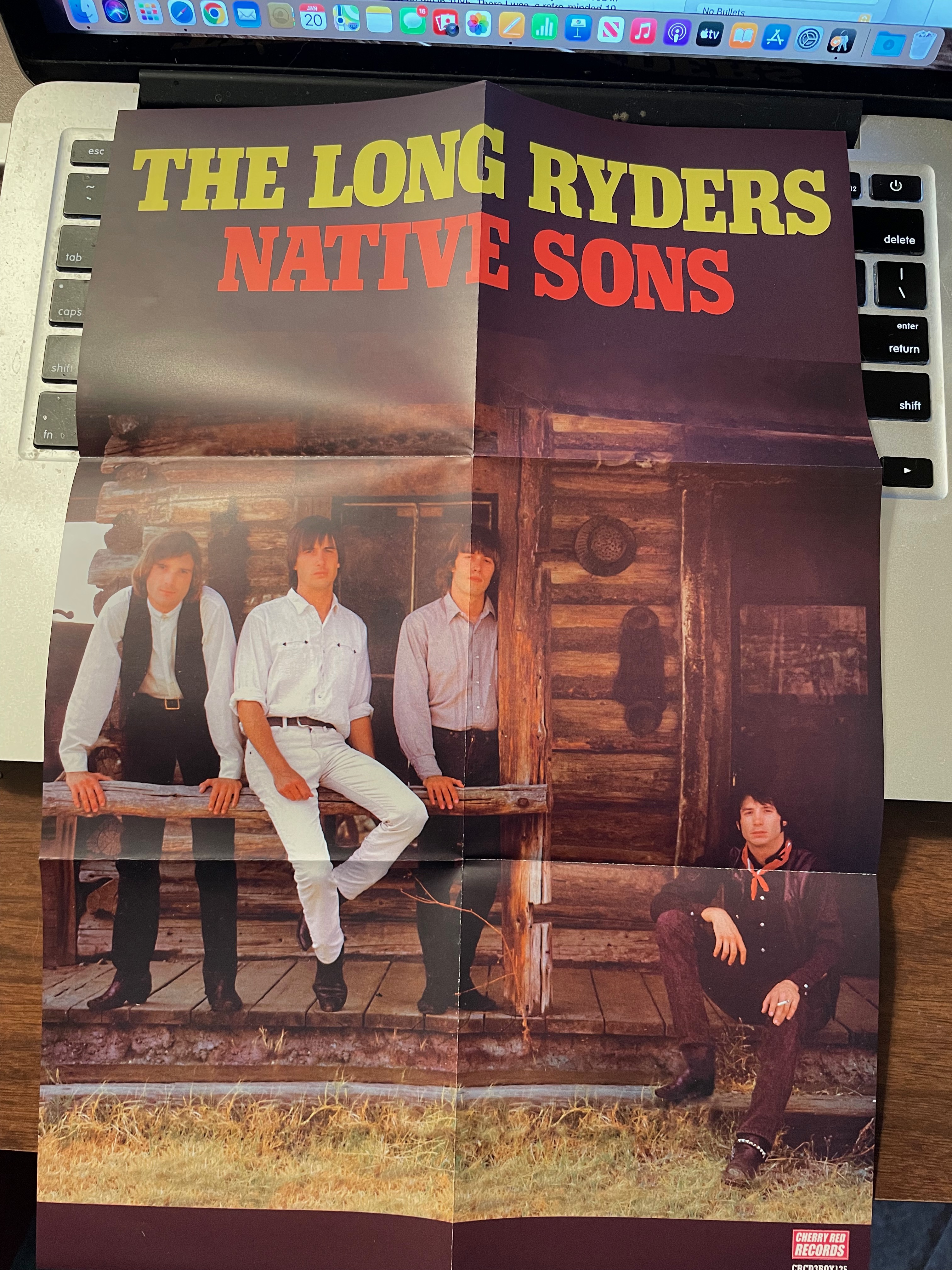
The set comes with a fold-out poster of the album cover as well as a booklet chockfull of photos, related ephemera and an illuminating Anthony DeCurtis-penned essay. But, as with all such sets, the reason to buy (or not) is the music itself. And this music is just plain great. New fans may feel overwhelmed at times due to the slightly repetitive nature of these sorts of box sets, but old-timers such as myself will be in their glory. Like other touchstone albums in my life (including State of Our Union), Native Sons has been a constant companion in my life since I first heard it. It’s made good times better and bad moments just a little more manageable.
Perhaps because of that connection I feel for the band, for Christmas Diane surprised me with a Cameo video from none other than Sid Griffin! So, for those curious, here’s that:
 The Old Grey Cat
5 thoughts