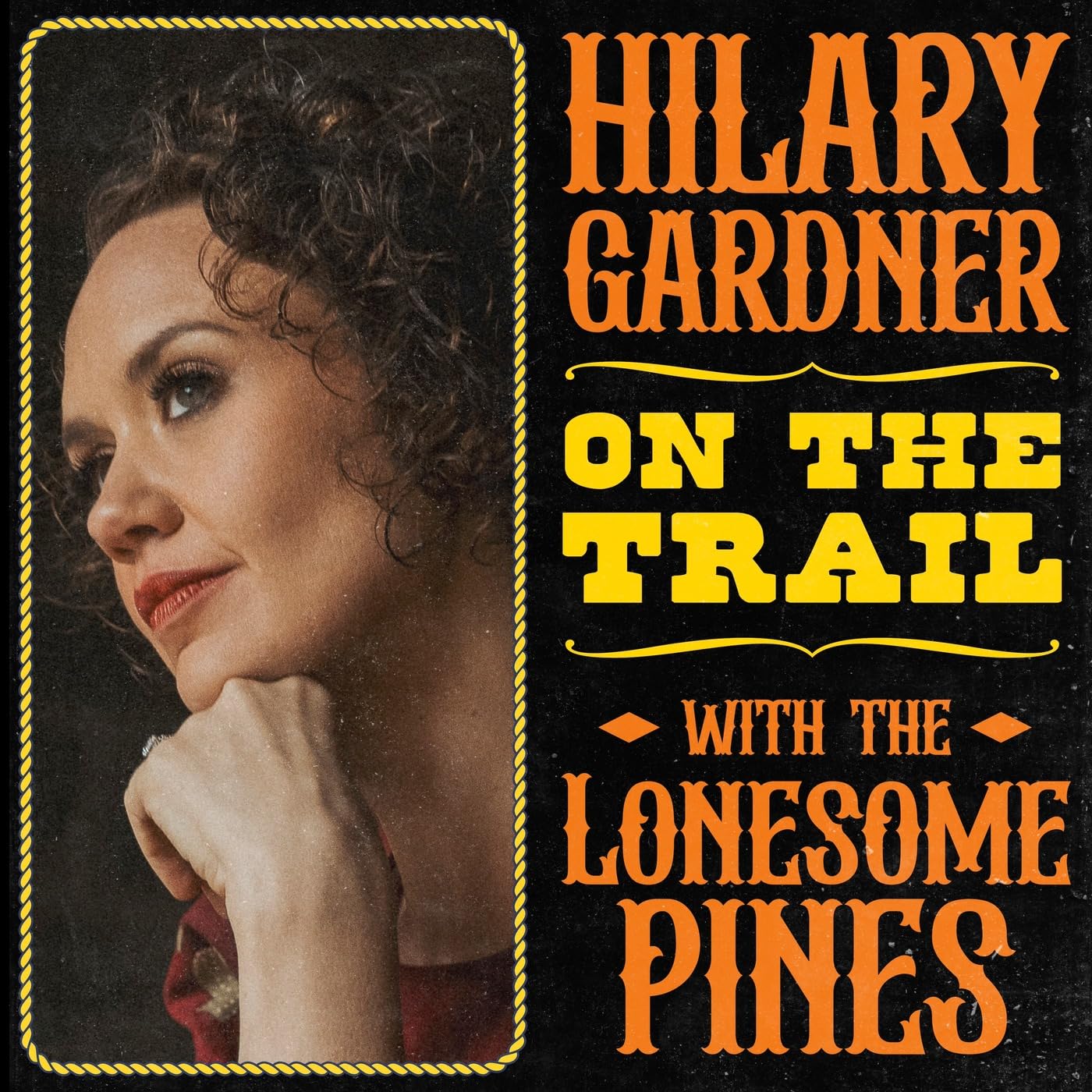
Alaska-born, NYC-based singer Hilary Gardner conjures the western swing of long ago on her latest album, On the Trail With the Lonesome Pines, as well as the supper club scene of the 1950s and beyond. The project got its start during the pandemic, when life in her Brooklyn apartment left her dreaming of wide open spaces. She began researching “trail songs,” as she calls them on her website, and learned that their origins weren’t always what she expected: “I was struck by how many songs were written not only by singing cowboys, but by jazz and film composers and lyricists like Johnny Mercer, Benny Carter, Frank Loesser, and others. I was fascinated to discover that many of these songs were debuted in Western films starring Roy Rogers or Gene Autry, only to be recorded later by a swinging big band or the original hip cowboy, Bing Crosby.”
The result is a sublime set of western-infused tunes first made famous by legendary (and sometimes not-so-legendary) singers and big bands. The delightful “Cow Cow Boogie,” for instance, was first sung by Ella Fitzgerald for a scene in the 1942 Abbott & Costello movie Ride ‘Em Cowboy that was cut; its first release came that same year courtesy of Freddie Slack & His Orchestra with singer Ella Mae Morse, though Dorothy Dandridge also sang it in a “soundie” about the same time. Gardner injects her own charm into the song, with the stripped-down arrangement adding to its power.
The same’s true for the other the songs here. It’s the cowboy way of life as imagined mostly by outsiders, romanticized and often dreamlike. “A Cowboy Serenade (While I’m Smoking My Last Cigarette),” written by Rich Hall and released by Gene Krupa and His Orchestra, captures the end of a long day on the range for a lonely cowboy, for instance. If Patsy Cline had covered it, one suspects it would have sounded like this.
The reference to Cline isn’t accidental. Diane and I first listened to the album while out and about Friday afternoon. “She sounds like Patsy Cline,” Diane said halfway through the opening number, “Along the Navajo Trail.” I agree, though I also hear ample amounts of the wonderful (and, these days, often unheralded) female vocalists of the 1950s, some of whom are featured in the Steve Bergsman book I recently reviewed. By then, once-popular big bands had given way to singers fronting small combos—an intimate sound similar to what Gardner achieves here. In short, On the Trail With the Lonesome Pines is akin to eavesdropping on a daydream. There’s much here to treasure.
 The Old Grey Cat