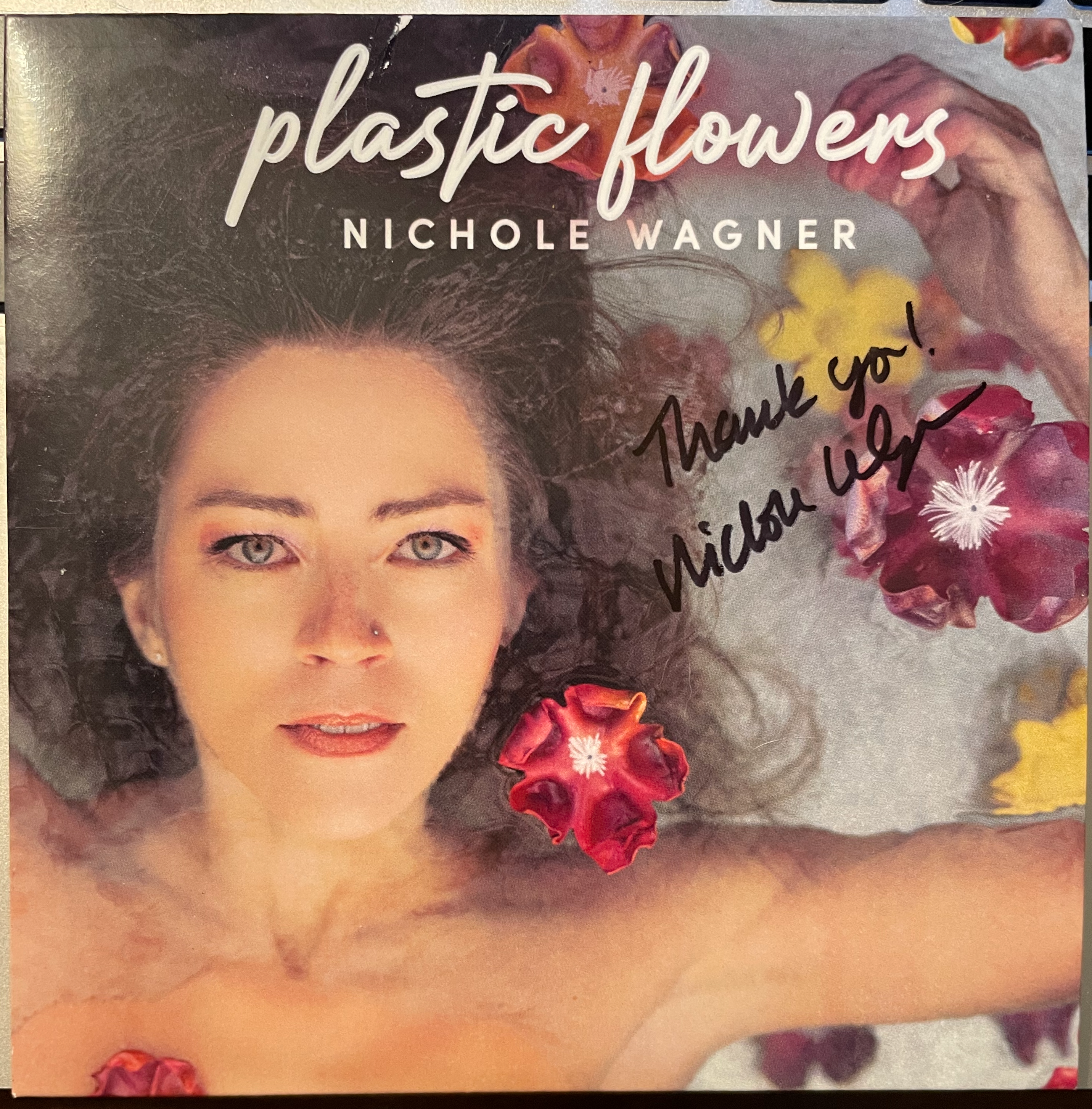
It feels like it’s been with me forever and a day and not just because, in a sense, it has. I’ve enjoyed Austin singer-songwriter Nichole Wagner’s Plastic Flowers off and mostly on since last September when, thanks to being a Kickstarter backer, the CD arrived on my doorstep. Upon that first listen, the 10 tracks sounded as if they’d been plucked from the collective unconscious and/or workshopped in dreams with Townes, Nanci and other late Texas songwriting greats. All these months later, they still do. They’re fresh yet familiar songs that mine the ancient archetypes that drive all things art.
“Monsters” opens with a martial-like drum and the strums of an electric guitar, while Wagner’s voice seemingly drifts in as if a feather from the sky. The figurative monsters that pockmark darkened bedrooms during childhood morph into the even scarier—and complex—realities of adulthood. That means, for her, losing a bit of herself while attempting to fit into her partner’s world, something no one should ever do. (In point of fact, that world should expand to welcome all of you.) She also confesses, “I didn’t know what to say to you on the night your mother died/Taste of copper in my mouth from biting on my pride.”
“Raised by Wolves” relays the survival mode many find themselves in after a lifetime of broken promises and broken hearts: “I know you don’t believe me/but I was raised by wolves/I learned to gnash my teeth just to survive.” As with “Monsters” and the songs that follow, it’s a compact and concise confession, with nary a note nor syllable out of place. Too, the guitar’s tone is just immense. “Everything” delves into another of the things that go bump in the light of day, aka the postgame analysis that invariably comes after a relationship’s end: “It’s a promise to be broken/It’s a ship that’s lost at sea/Head on collision in slow motion/It’s everything you took from me.” “Self Defense” ups the tempo and guitars while digging into the relationship’s ruins.
The title track—which I spotlighted a while back using a similar lede to the one above—is what I sometimes call “one of those songs,” with the italics meant to emphasize how the lyrics and melody reverberate through the soul like few others. “I Know Better This Time” shares lessons learned the hard way as well as a catchy hook. “A Way With It” is another cutting confessional that includes a monologue no doubt meant for herself: “Old habits, they die hard/Stay the course, stand your ground/Don’t let down your guard.”
“Until the Water Comes” is the longest track on the album yet lilts and swings as if it’s a two-minute wonder. It turns a storm into a metaphor about survival and moving on, of stepping from the darkness into the light. It also features some of my favorite lyrics on the album: “It’s been a long time coming/I can finally feel the sun/But you never know if you’re on high or low ground/Until the water comes.”
The delicate “Beauty Where You Find It” opens with an acoustic guitar that’s soon joined by strings, while Wagner’s lyrics relish a lingering regret over a kiss missed due to her hesitation. In a sense, she’s basking in the glow that preceded the moment: “It’s the sound a secret makes when it’s whispered in the dark/Buzzing through the air like fireflies.” The album closes with the touching “The Road That Jack Built,” a celebration of her late grandfather that’s told with journalistic precision.
In short, Plastic Flowers is far from a pressed product. It’s the work of a talented wordsmith whose melodies circulate and percolate through the heart and mind long after the music has faded to silence.
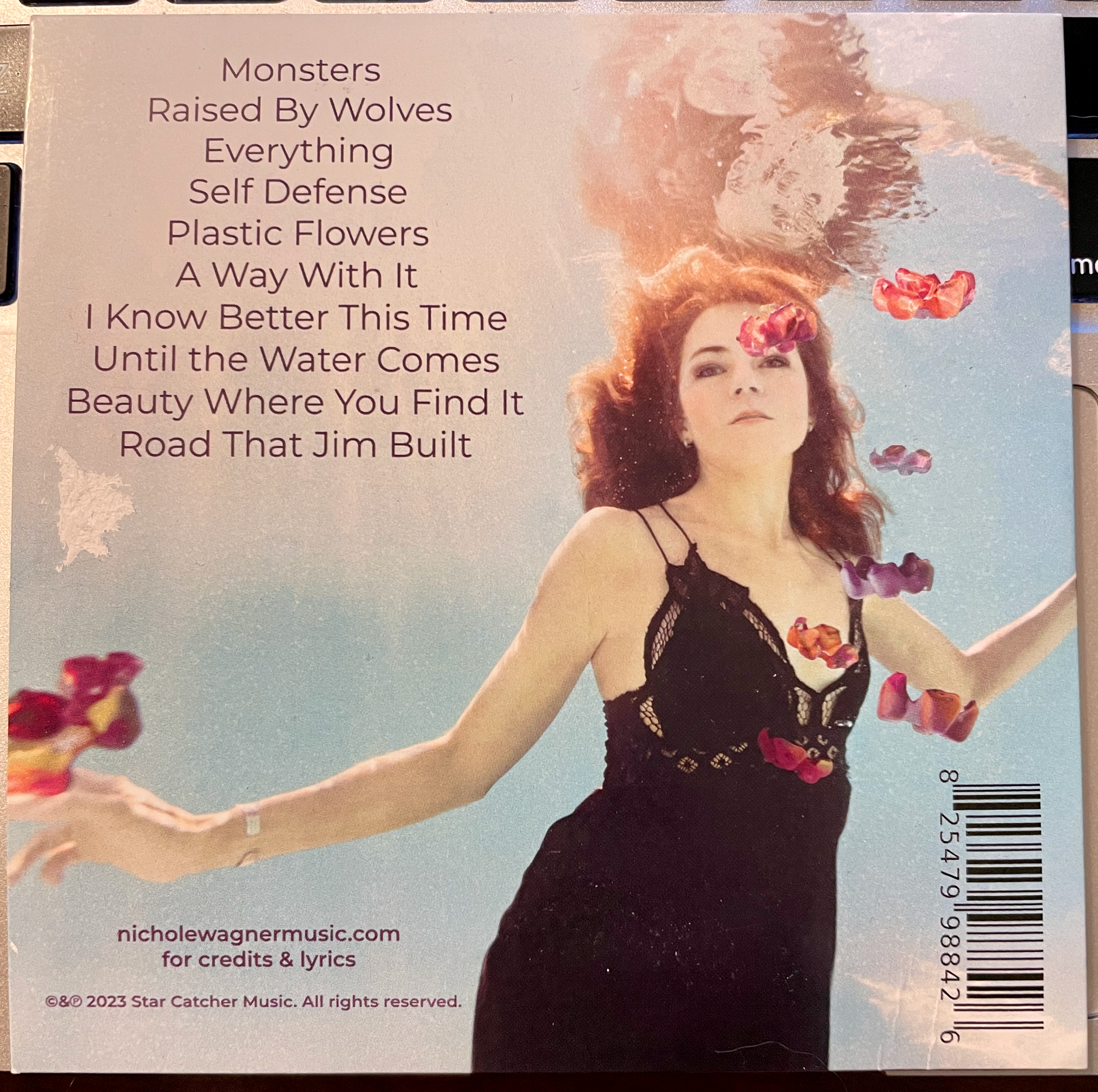
The track list:
 The Old Grey Cat