


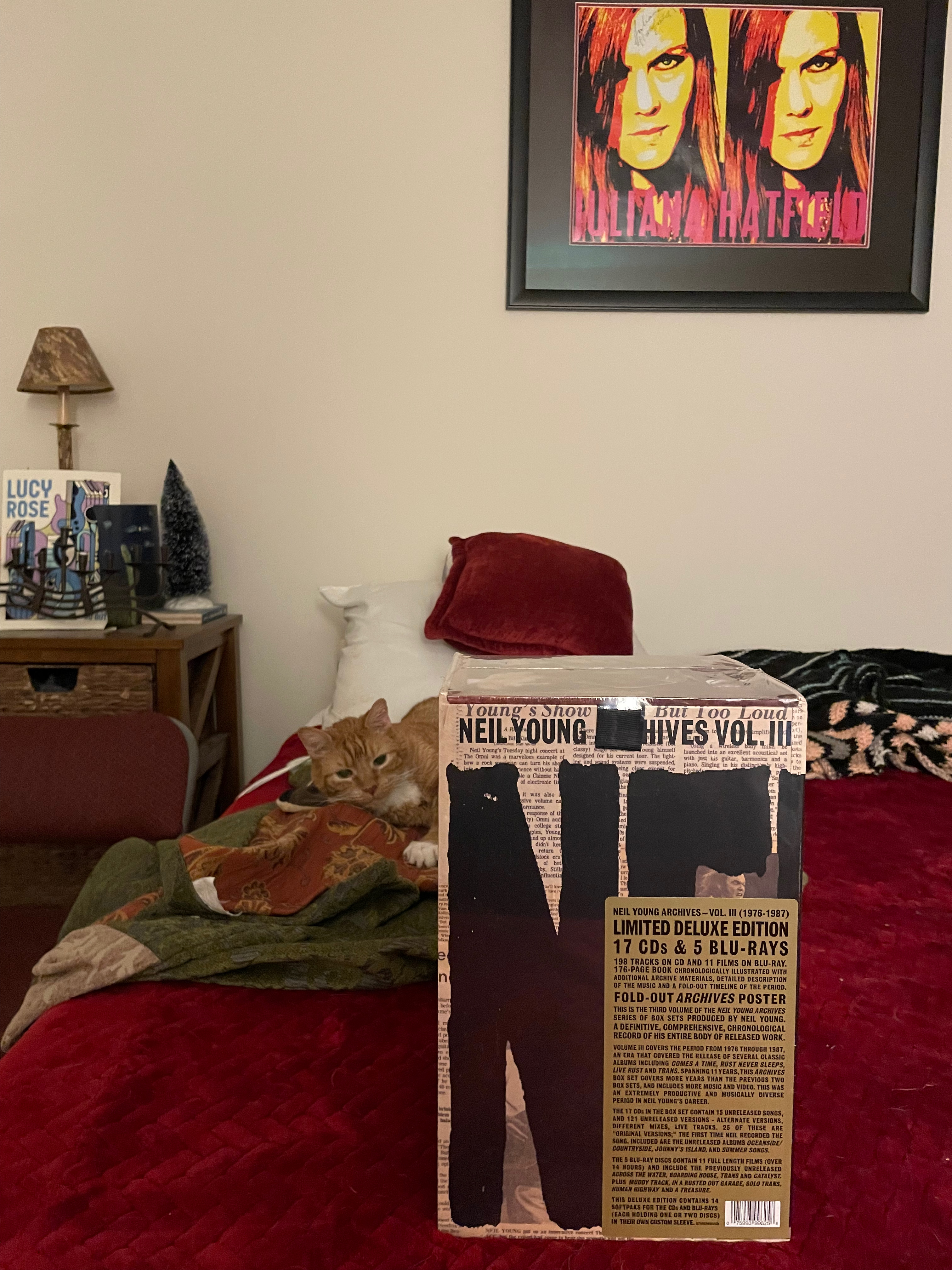
I’m immersed in Neil Young’s massive Archives Vol. III, which spans the years 1976 to ’87, today. Released last Friday, it contains 17 CDs and five Blu-ray discs packed with concert recordings and rarities. I’ll have more to say about it in the weeks to come, but for now: As I noted last week, although I pre-ordered the behemoth set, I didn’t expect it to arrive on release day—and, as expected, it did not. I carried it inside from our doorstep on Wednesday night, upon our return home from seeing Emmylou Harris in concert.
However, I assumed—as did other fans—that I’d be able to stream the music in the interim via the online Neil Young Archives, a subscription site well worth its annual fee. Archives Vol. II, for example, was available from the get-go. But, as I noted last Sunday, Vol. III has yet to pop up on the website—perhaps so Reprise, Neil’s label, can eke out as much cash as it can from the physical box set. Why buy the cow when you can get the milk for a small annual fee?
File downloads did come with the set—high resolution files (24/192) that, altogether, clock in at about 27 gigabytes! Unfortunately, the “download all” option fizzled about halfway through each of my five attempts, with some files erroring out and others corrupted (small file size was the tell). It wasn’t until late Sunday, after I’d spent the bulk of the day downloading the files one-by-one, that I had the entire set on my hard drive. Complicating matters: Those files lacked key metadata—disc and track numbers. I spent an additional 90 minutes updating them so that they would play as intended—1 to 222.
I’ve listened to bits and pieces from it over the past week. The live Across the Water discs, which feature Neil solo and with Crazy Horse circa 1976, is acoustic/electric zen at its finest. Another section, dubbed Snapshots in Time, captures Neil in 1977 playing a bunch of new songs for Nicolette Larson and Linda Ronstadt, who add harmonies on the fly, while sitting around a table at Ronstadt’s Malibu home.
It was well worth both the wait and frustration.
And therein lies one lesson I wish I’d taken to heart early on: patience. I spent much of my early years in a rush to grow up, to do this and experience that, and then burrowed into the wonders of the world intent on fulfilling my every want. “Good things come to those that wait” seemed an antiquated saying to me.
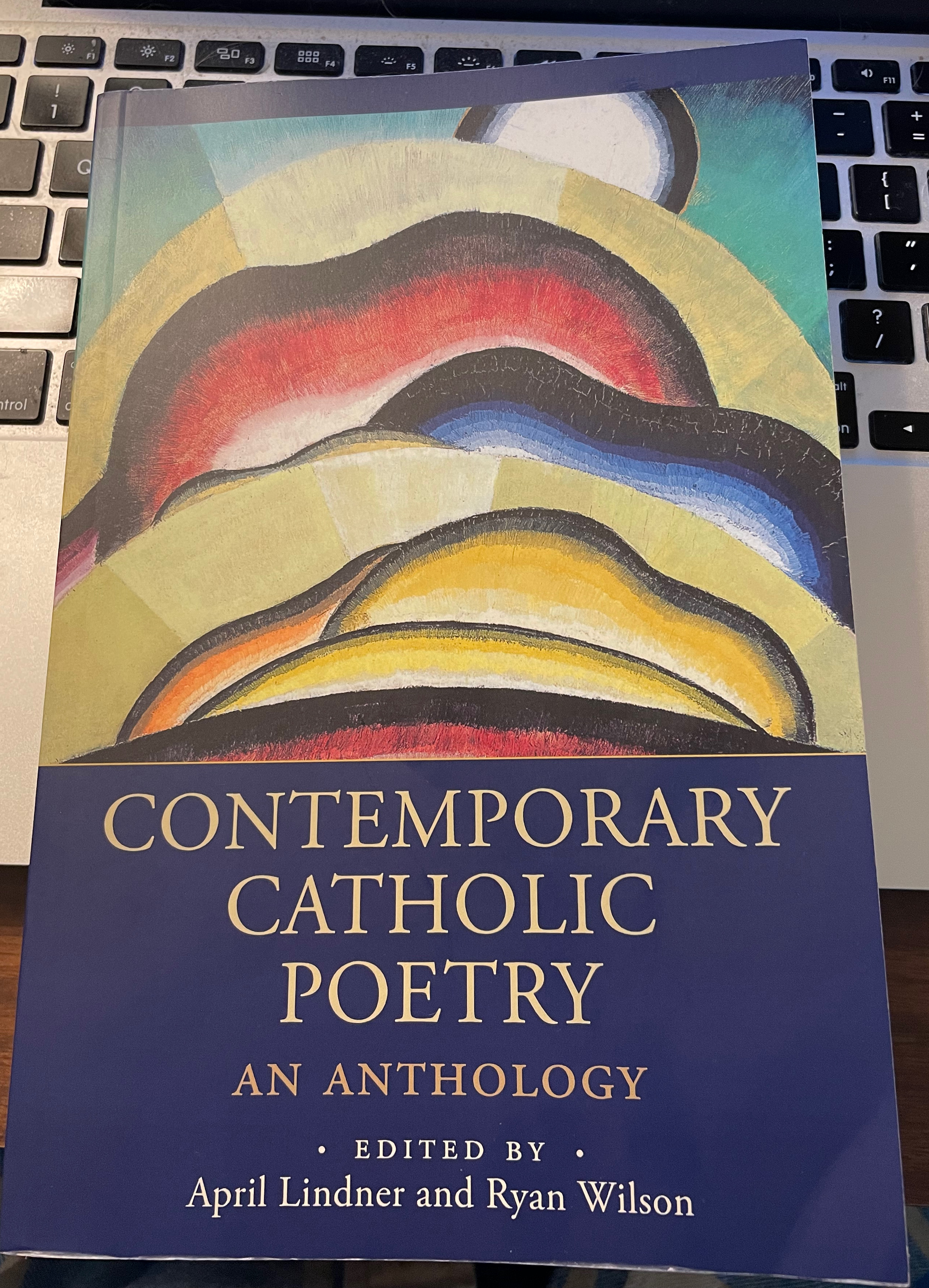
I received another treasure in the mail Thursday afternoon, Contemporary Catholic Poetry: An Anthology. (Disclosure No. 1: I am not Catholic. Disclosure No. 2: Diane and I are friends with one of the book’s editors.) It includes “Elegy for Everyone,” an insightful poem by Alfred Nicol, which opens as an ode to obituaries and one Sister Joan Margaret, who did God’s work in Haiti, before expanding in scope to question “the endless repetition of mistakes/the Maker makes, from which you’d think he’d learn.” The imperfections that pockmark our impermanent lives give rise to doubt, but it’s a doubt quelled by Nicol with a non-answer answer in the poem’s final stanza:
Only human doesn’t get things done,
not the things that matter. Only human
sends a check and gets a calendar.
Only human gets enthusiastic
now and then. It never lasts. So what.
The things that matter always take forever.
Only human doesn’t have time for that.
It reminds me a bit of the first half of the famous quote from Unitarian preacher Thomas Parker (1810-60): “I do not pretend to understand the moral universe; the arc is a long one, my eye reaches but little ways; I cannot calculate the curve and complete the figure by the experience of sight; I can divine it by conscience. And from what I see I am sure it bends toward justice.” Parker is not saying, as some suggest, that all will work out in the end; rather that we should attempt to influence the outcomes we seek. But that’s a discourse for another time. “The arc is a long one, my eye reaches but little ways” is the part of the quote I’m leaning on at present; it speaks to God’s expansive design, which extends far longer than our limited time on Earth.
Much of what this human deemed as important when young, in other words, carries less and less heft with my every passing year, replaced by the intangibles that truly make life worthwhile: love, family, friends—and memories of them, too. It’s not to say I won’t and don’t buy things I don’t need, as Archives Vol. III is evidence of that, just that I’m aware much if not all my so-called “treasures” will wind up in a dumpster or a secondhand store, with my heirs making a pittance of what I spent.
 The Old Grey Cat
One thought