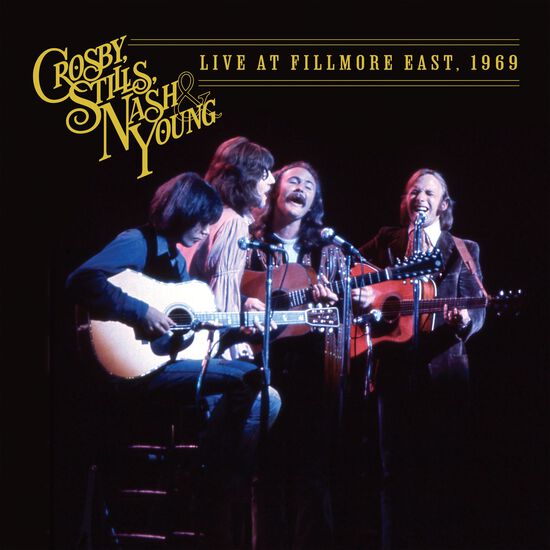
September 20, 1969: Compadres David Crosby, Stephen Stills, Graham Nash and Neil Young close out a two-night, four-show run at New York City’s fabled Fillmore East. CSNY, as most folks reading this will or should know, is still in its infancy at this stage. The self-titled debut LP from Crosby, Stills and Nash, released in May, turned many ears due to its low-key hipness but, when it came time to hit the road, the three realized they needed a fourth. Rather than hire a sideman, as they would for bass and drums, they deign to go big. But when attempts to woo John Sebastian and Stevie Winwood fail, they agree—at the urging of Atlantic Records’ Ahmet Ertegun—on Stills’ former Buffalo Springfield stablemate, Neil Young.
Rehearsals, rehearsals and more rehearsals ensue in New York, with the initial pick to play bass, Bruce Palmer, soon kicked to the curb in favor of Greg Reeves, who’s recommended by Young’s old pal Rick James. Drummer Dallas Taylor, who played on the CSN debut, rounds out the sextet. The original plan to start the tour in the Big Apple is rejiggered, however, when Nash is forced to rest his voice after developing polyps on his vocal cords.
As a result, the group debuts their live skills at Chicago’s Auditorium Theater on August 16, where they play an early and late show; Joni Mitchell opens. (Tickets, for those curious, ranged from $3.50 to $6.50.) Two days later, they hit the stage at the now legendary Woodstock music festival at three in the morning. Over the next month, they play a week-long engagement at the Greek Theatre in L.A., film two TV appearances (The Music Scene and This Is Tom Jones) and appear at the Big Sur Folk Festival. Then New York beckons.
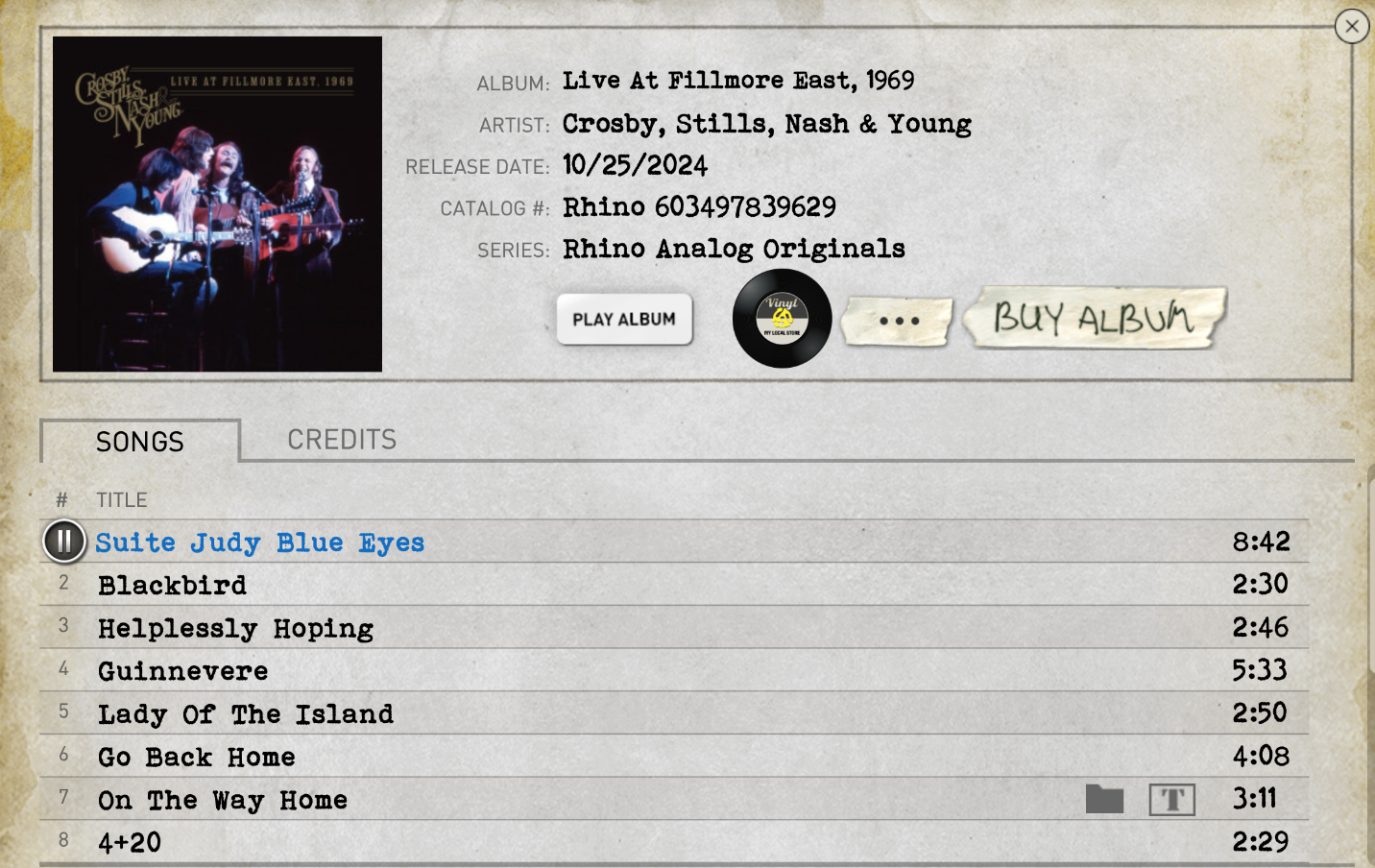
Live at Fillmore East, 1969 captures the magic. The first half is acoustic, the second electric, while the sound—overseen by Stills, Young and John Hanlon—is pristine. Everything I’ve read indicates that it hails from the late show on the 20th. If the Neil Young setlist site Sugar Mountain is accurate, then, a few songs were left out and the set order tweaked—similar to what Young did with his archival Young Shakespeare a few years back. Between-song patter is also excised.
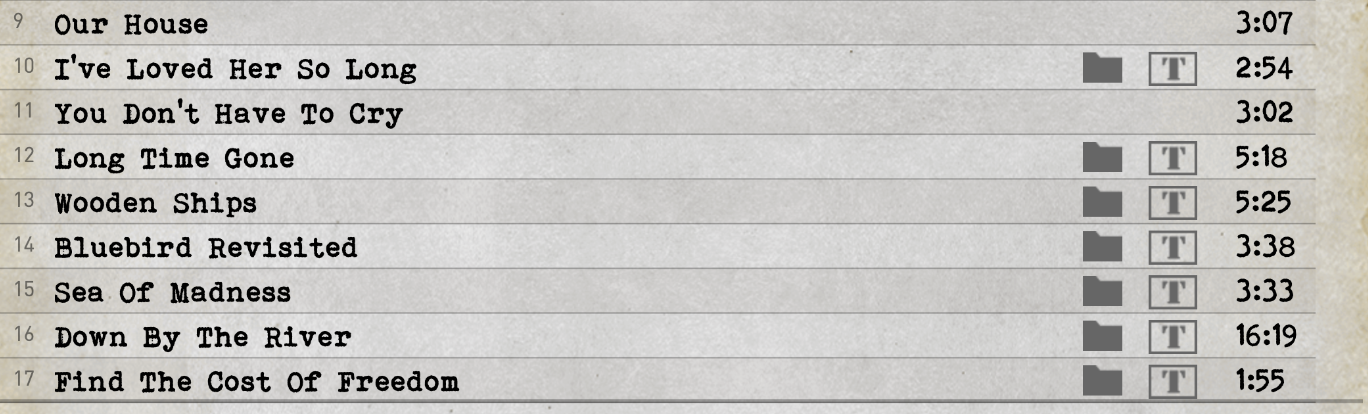
Doesn’t much matter. What’s here is phenomenal. While Young waits backstage, Crosby, Stills and Nash weave ethereal wonders during the initial stretch of songs, with the opening “Suite: Judy Blue Eyes” giving way to a cover of the Beatles’ “Blackbird,” while Crosby’s “Guinnevere” is absolutely stunning thanks to Nash’s genteel harmonies, while Nash’s “Our House”—which he’d record for Deja Vu—will leave you singing along. Neil saunters to stage center for “On the Way Home,” which rightly receives a round of applause at the start. “I’ve Loved Her So Long,” a highlight from his solo debut LP, is a stripped-down delight that’s buttressed by the addition of Nash’s harmonies.
The electric section is as fine, if a tad more ragged, with Crosby singing his heart out on “Long Time Gone,” and the band sailing into the sky on “Wooden Ships.” The highlight, however, is a riveting 16-minute “Down by the River” that floods the brain with dopamine.
All in all, its an excellent set that’s well worth many listens. It’s available on LP, CD and via the usual streaming sites, including the Neil Young Archives.
 The Old Grey Cat