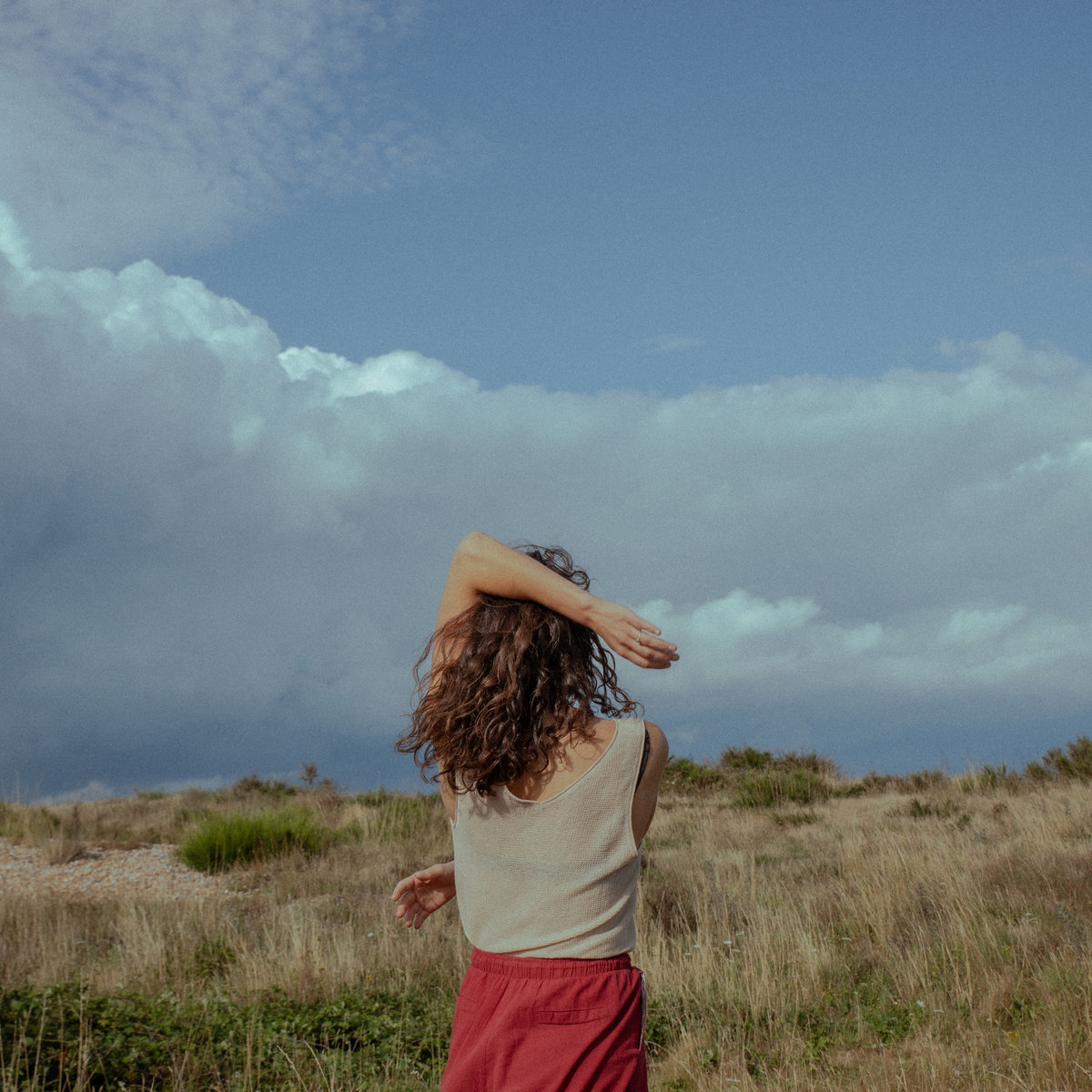
London-based singer-songwriter Sophie Jamieson’s sophomore set is a stunning song cycle about life and love. It’s low-key introspection but not production, with swells of instrumentation and vocals flooding forth and then, just as quickly, receding out to sea. Jamieson, in a sense, is a dramatic lone figure peering out at a stormy scene from rocky cliff.
She has a poet’s knack for presenting her multidimensional musings in a subtle manner, and of employing metaphors to further them. The act of taking a picture, as she shares in “Camera,” becomes a stand-in for life itself, for recognizing what does and doesn’t actually matter to the shot, how the foreground may not be as important as what lies beyond it. Along the way, she sounds as if she’s singing not into our ear but from inside it, i.e. giving voice to our anxieties and fears and not her own.
“Vista,” for instance, turns a car trip into the excavation of a stunted relationship: “Then you’re pulling up/Parking at the viewpoint at the cliff/Tell the truth, love/Is this where you wanted us to live?” In some respects, and this is true of the album as a whole, it reminds me a bit of the final stanza of poet Matthew Arnold’s “Dover Beach,” an existential ode about love and faith that’s meaning is still debated by scholars.
Ah, love, let us be true
To one another! for the world, which seems
To lie before us like a land of dreams,
So various, so beautiful, so new,
Hath really neither joy, nor love, nor light,
Nor certitude, nor peace, nor help for pain;
And we are here as on a darkling plain
Swept with confused alarms of struggle and flight,
Where ignorant armies clash by night.
In Jamieson’s case, the relationship could well be with another—a lover, her mother, someone of significance—or even herself. The lyrics focus on the ride and the cliff, the scene before her, with both parts of the equation representing something more. Many of us have, after all, scaled precipitous heights and peered into the darkness at some point. “I don’t know what to save,” the next song, peels away the analogies to give us a peek into the matters at hand: “I don’t wanna push you away/But distance speaks in volumes/And I’m only just ok.” In the press release, she explains, “This song was some kind of running break for freedom. I was carrying the weight of my attachment to a person and all the pain entangled with them, but here came an out-reaching, a burst of energy and glimmer of hope. It was an enormous push towards letting go. The unbearable pain of detaching felt like entering some kind of eerie, unknown space that turned out, upon arriving, to be not only totally survivable but like pure, fresh air.”
“Baby,” for its part, mines the joy and trepidation of becoming a mum, though again it takes on a double meaning by song’s end. The plaintive “Highway,” which follows, eases down the road in search of a sunrise, while “Welcome” welcomes a new addition by sharing apt advice. The title track, on the other hand, finds her longing for family ties that never unravel.
“How do you want to be loved?” cuts into the heart with a surgeon’s precision, while “Your love is a mirror” holds a looking glass at things that aren’t easily overcome. “I’d take you” delves into how distance can provide a clear view of a situation that’s blurry up close; it’s “can’t see the forest for the trees” set to song. In some respects, it’s “Camera, Part 2,” eschewing the foreground for what lies beyond. The album closes with “Time pulls you backward,” which casts a glance at a relationship that wounded her.
We imagine when young, thanks to the books, TV, and pop songs we consume, that life will unfold in an almost step-by-step manner, that a first date gone well will turn into a second and then a third, and that when or if the waltz goes wrong, it’s our fault. (Sometimes it is, of course, but often it’s not.) As a result, as uncomfortable as it may make us, we hold on out of fear not of being alone. Ill-formed lessons passed from one generation to the next often fuel the stasis, but so too do the anxieties and insecurities we’ve accrued on our own. Were we wrong all along? Was it all for waste? Whether aimed at the other or ourselves, recrimination is a delicate dance; it’s common, I think, to trip over one’s own feet. On I still want to share, Jamieson stays out of her own way. As I said up top, the album is a stunning song cycle about life and love—both writ large and writ small.
 The Old Grey Cat