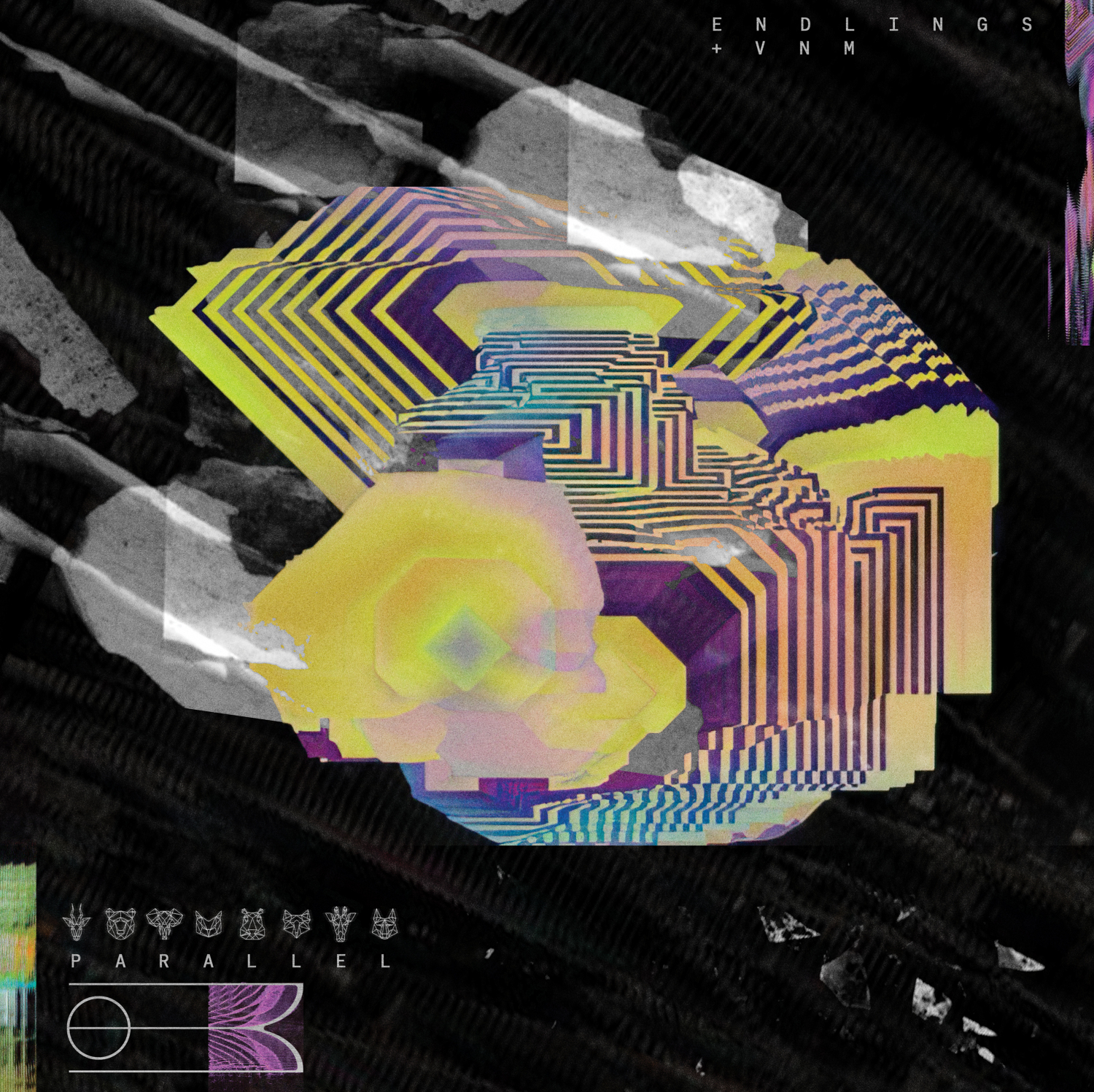
Two months since I first pressed play on Parallel 03 and I’m still not sure what to think about it—a good thing. On the one hand, it’s an esoteric exercise that runs for 40-some minutes, the result of a project led by the Endlings (aka Deerhoof’s John Dieterich and Pulitzer Prize winner Raven Chacon), and the Vancouver New Music Circle (Parmela Attariwala, Adrian Avendano, John Brennan, Steve Chow, Elisa Ferrari, Marina Hasselberg, Alanna Ho, and Joel Schuman). On the other hand, it’s a collection of 14 sound collages that mixes and matches the different ways people process thoughts.
It’s an LP. A website. And, as those who click that second link will discover, an interactive online instrument.
The project dates to the summer of fall of 2020, when lockdown life was all the rage. What better way to collapse time than creating something from nothing? To borrow from the Parallel 03 page on the VNM website, the participants “became generators, translators, mis-translators and filters for each others’ ideas in an incalculable feedback loop of expansive processes.” Or, as the Bandcamp page helpfully puts it, the endeavor evolved into a “shared folder, many folders, an anonymous process, a translation device, a score, a text, a sound, more sounds, words, many scores, a multiplier, an exercise in collaboration, a bridge, a mixer, an index, a list, room with rooms in it, a journey or a trip, an album to be.”
If that sounds confusing, well, that’s because it is. It plays like a series of discordant compositions, far more John Cale than John Cage. The tracks are strange and unsettling, yet ultimately compelling. Poetry exists in the daily dissonance of life, after all; we just need to strive to hear it.
Earlier this week, totally by chance, I read a fascinating story in BBC Science Focus about the mental machinations of the thought process. Some folks, including myself, possess what’s called an internal dialogue or monologue—we think in words and sentences. Others, however, experience thought in an abstract fashion. As one of the article’s subjects explains, “[E]ach of my thoughts feels like a bubble rising into my consciousness. Inside the bubble is a combination of concepts, images and feelings, but no words or speech.” There’s more to it than that, of course, and whether one thinks in a what I’ll dub a classicist or impressionistic manner doesn’t mean there’s anything right or wrong with one’s brain; rather, it’s indicative of the diverse richness of the human experience.
I bring that up because the article provided unexpected context to Parallel 03, which explores the mental terrain that lies between the conscious, subconscious and unconscious.
 The Old Grey Cat
One thought