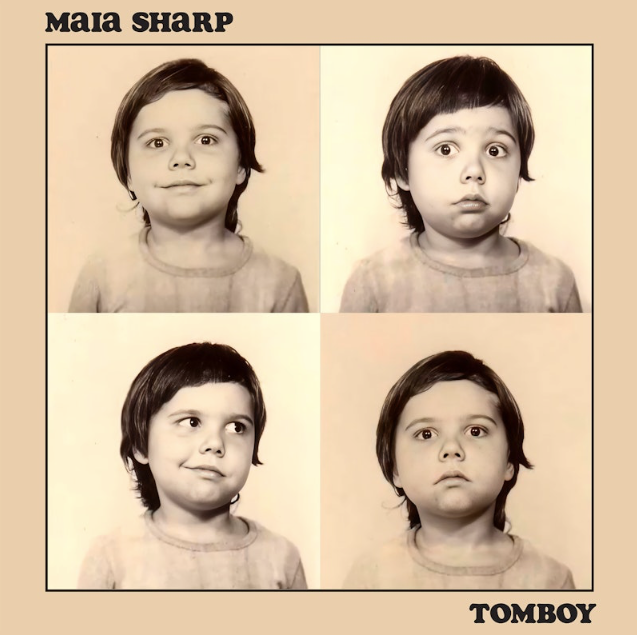
It’s an odd thing, growing old. We sometimes, especially at weddings and funerals, find ourselves in rooms full of kids who are no longer children. Some are parents, others not, but either/or they’ve matured. They’re knee deep into life and—if lucky—love, with mortgages, car payments, and all the concerns we’ve dealt with for decades weighing on their shoulders. We see ourselves in them, and—though they may be loathe to admit it—they in us.
We see ourselves in the bathroom mirror as well, of course, and ponder whether the ancient face returning our gaze is real or the result of bad lighting. Memories, too, become a topic of internal debate and discussion, with our past deeds, dreams and fears simultaneously distant and near. Was it really x years ago when such and such happened?!
On her 10th album, singer-songwriter Maia Sharp—whose songs have been recorded by Trisha Yearwood, Bonnie Raitt, the Dixie Chicks, Cher, Keb’ Mo’, and Art Garfunkel, among others—looks back and forward in much the same way. “Tomboy,” the first track (and, a few months back, lead single) digs into her childhood, when she felt apart from her peers. As with many of the songs that follow, it’s an acoustic confessional and percussive revelry, with the rhythms rising and falling alongside the recollections of her nonconformist girlhood ways.
“Counterintuition” continues along the same thematic path, explaining how she still moves to a beat of her own making, while expanding the sonic palette ever so slightly. “Is That What Love Does,” on the other hand, explores how the first flush of love colors our perception: “Same house, same street, same skin, same town/Same troubled world spinning around/But nothing’s like it was/Is that what love does?” Throughout, she sports a dusky voice that reminds me at times of Kathy Mattea’s.
“Only Lucky” also delves into perception, this time about how many of us—whether in or out of love—often see the world around us in slightly skewed form. “Edge of the Weatherline” mines similar terrain, recalling a drive through a storm not of her making: “I never thought much of nostalgia/but I’m a sucker for an ‘80s song/one that can’t be about you….” It’s a moody tune that features the sonic equivalent of a god ray via a soulful sax solo—and a lyrical epiphany that is its match: “I can’t hold onto what was never mine.”
“Asking for a Friend” features a jingle-jangle vibe thanks to Sharp’s father, songwriter Randy Sharp, on electric guitar. “Better Story” reins in the Byrdsian overtones while sharing a writer’s lament. Who hasn’t put pen to paper only to realize what’s spilling out doesn’t match with what’s in our head? (Of course, it’s also a metaphor for life.) “A Fool in Love Again” may, for Sharp, may be the better story she’s hoping for. That said, as the life survey “Any Other Way” asserts, she’s also satisfied. (Unlike in the movies, one can want love and, still, be happy.)
The album closes with a lowkey rendition of U2’s “I Still Haven’t Found What I’m Looking For” that features Garrison Starr on backing vocals. Many of us will always hear Edge’s percolating guitar, Larry Mullen Jr.’s compelling drums, and Bono’s yearning vocals regardless of who’s performing the song—but, even so, it makes for a fine end to an album that should resonate with those of us of a certain vintage.
 The Old Grey Cat