Death, be not proud, though some have called thee
Mighty and dreadful, for thou art not so.
—John Donne
Death need not be literal, too. Just as the sun’s rise and descent on the horizon is an optical illusion tied to Earth’s rotation, the same’s true for what the poetically inclined sometimes call the “final passage” or “final curtain.” Donne, for instance, was an Anglican cleric who posited that death is a door to another plane of existence. I.e., heaven. Other religions embrace the idea of reincarnation and rebirth, of the soul traveling forward through time. The same’s true, in a figurative sense, for the lesser finalities we all face. Ends invariably lead to beginnings.
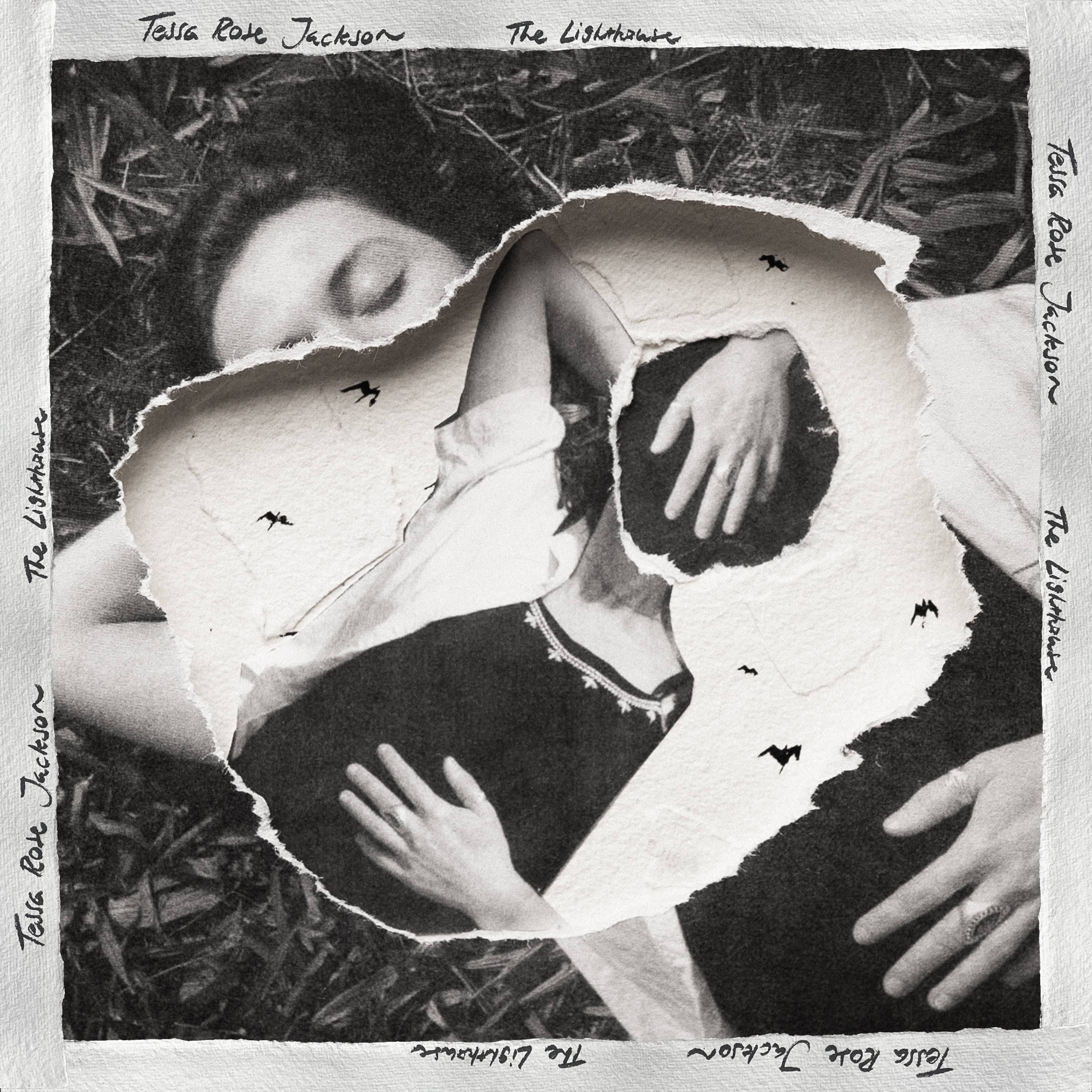
Dutch-English singer-songwriter Tessa Rose Jackson’s new album, The Lighthouse, delves into matters of life and death, both metaphoric and actual. It’s folk in form but pop in practice, filled with light and darkness, home to feathery songs that seemingly float on sonic gusts and others that are reminiscent of Suzanne Vega’s mesmerizing miniatures. “It’s an album that talks about death, but not in a purely dark sense,” she explains in the press release. “For me, it’s also about the celebration of life—embracing fears, identity, and the stories we inherit.” It helps that she has a way of painting vivid word pictures. “The Lighthouse,” which opens the 12-track set, is a good example; though she credits Tim Burton and Hadestown as its direct inspiration, it conjures for me the stormy sea visages of such artists as Edward Hopper and Vilhelm Melbye:
I sail a high tide on a lonesome wind
A trail of old spite, invited in
The saltiest skin bent to drink the rain
And the memory’s faint
I’ve been away
I knew her by name
I’ve been away
The ethereal “The Man Who Wasn’t There” ponders paths untaken—and how, at the end of the day, such thoughts steal from the here and now. “Bricks That Make the Building” finds her stepping into the shoes of a spirit that returns to its former home and, too, exploring how we all share space with those who came before.
A Mellotron flute accents “Dawn,” which Jackson wrote for her niece; the song ups the tempo ever-so-slightly while sharing pertinent advice for everyone, not just teens. “Built to Collide” could well be a mirror, at least at its start, as it delves into writer’s block, false fronts, and a penchant for avoidance via confrontation; it’s one of the songs that reminds me of Suzanne Vega.
The same’s true for “Gently Now,” which should resonate with anyone who’s cared for an ailing loved one—or, like me, is simply getting old. “When Your Time Comes” asks the listener—and herself—to imagine their final moments: “Some say we’ll meet our maker/Some say conscience is a switch/Tell me I’ll go unwavering/When my time comes.”
The propulsive “Fear Bangs the Drum” encourages us to face up to that which scares us, be it death or tinpot despots: “Steeped in the knowledge/That all of this will make way/With a sweet irreverence/The old moth to the flame/The rush passed/The loves last.” The sweet “By Morning,” inspired by an argument with her partner, channels both the whimsy of Paul McCartney and a certain Johnny Rivers song from the ‘70s; it’s an enchantment set to song, to be concise. The same goes for the acoustic “Grace Notes,” a lovely meditation on aging, and “Wild Geese,” a tribute to her mother. The album concludes with “Prizefighter,” which steps into a metaphoric boxing ring to encourage us to knockout the trepidations that too often hold us back.
In short, The Lighthouse is a sumptuous outing that delves into the philosophical underpinnings of this thing we call life. I’ve played it a lot over the past month-plus and have never not heard something new—and, at the same time, old—in its grooves. To borrow the closing lines from the poet Denise Levertov’s “To R.D., March 4th 1988,” “We heard strong harmonies rise and begin to fill/the arching stone,/sounds that had risen here through centuries.”
(The album, which is out January 23rd, can be purchased from Jackson’s web store.)
 The Old Grey Cat
One thought