One storm down, another in the wings: That sums up life, these days. Yet, unlike in decades past, when similar squalls swept this land, the upset pronounced in popular song is nowhere to be found. It’s weird, right? At one point in time, rock and pop music mirrored the zeitgeist. The airwaves of the 1960s and ‘70s were filled with tunes that championed civil rights, railed against needless war, spoke against injustice—sometimes obliquely, sometimes directly. Now, not so much. Where have all the protest songs gone?
Last May, in a piece about Bruce Springsteen’s Land of Hope & Dreams EP, I shared what I dubbed an “imperfect” summary of rock ’n’ roll’s rebellious roots, noting that it “is now perceived by many—especially those raised on ‘classic’ rock radio—as entertainment.” Its anti-establishment bent was erased long ago, basically. The shift started in the late ‘70s and accelerated during the MTV-fueled ‘80s and ‘90s, leaving the genre adrift. It’s one of the reasons why rock music is no longer the dominant music form.
Sure, sure, I’m speaking in generalities here; there are exceptions to everything, with most of those—it seems to me—coming from older, established artists. The rest, I imagine, are afraid of alienating part of their fanbases and/or being dropped by their labels. Bruce Springsteen is not one of them, however. As anyone who’s listened to his commentaries in various rock music documentaries can attest, he well understands the role that rock music played in its heyday—and could play again.
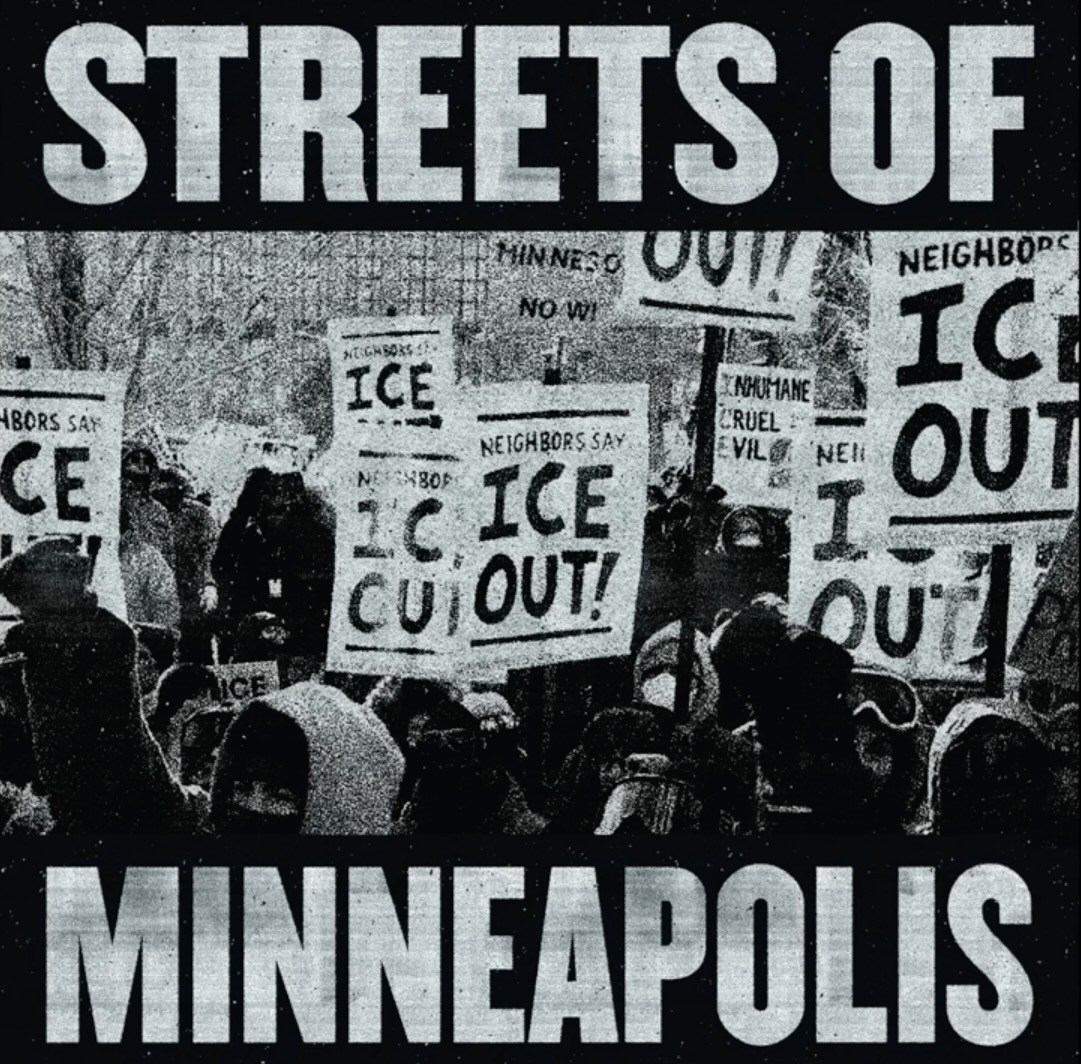
On the one hand, “Streets of Minneapolis” reminds me of CSNY’s confrontational “Ohio,” which Neil Young wrote—at the behest of David Crosby—after seeing pictures of the Kent State massacre in Life magazine. The band rushed into a studio, recorded the song, and released it as a single in a matter of weeks—a whirlwind response in the analog era. Here, as detailed on Instagram, Springsteen wrote his fiery response to the events in Minneapolis on Saturday, recorded it on Tuesday, and—thanks to the digital world we now occupy—released it on Wednesday.
On the other hand, the wordy dispatch also reminds me of Bob Dylan’s “Chimes of Freedom” because, well, it borrows liberally from its melody. (If you’re going to borrow, borrow from the best!) The lyrics are earnest, angry, and mournful, and—much as Young did in “Ohio”—call out the President and his brown-shirt thugs:
Against smoke and rubber bullets
By the dawn’s early light
Citizens stood for justice
Their voices ringing through the night
And there were bloody footprints
Where mercy should have stood
And two dead left to die on snow-filled streets
Alex Pretti and Renee Good
Not all protest songs live long lives, of course. They reflect the times in which they were written and released, with only a handful transcending generations; if things play out as they should, most become fodder for amateur critics and historians such as myself. (That’s how it should be, at least.) It’s too soon to say which way “Streets of Minneapolis” will go, but for this moment in time it’s a great response to a horrific abuse of power. The demented tinpot despot needs to go.
 The Old Grey Cat