Some say a generation’s innocence shattered when the small Beechcraft Bonanza plane carrying Buddy Holly, Ritchie Valens, and the Big Bopper, aka J.P. Richardson Jr., crashed in an Iowa cornfield on a cold early morning in February 1959, but that’s poetic license at work. Innocence dissipates. Naivety frays. Ignorance cracks. While every generation’s trials are unique, succeeding generations tend to see them as oblique—especially these days. TikTok trends and social media analyses simplify everything.
The day the music died, most of us weren’t alive or, if we were, fully cognizant of its significance. We learned of it, and all things historical rock ’n’ roll, from movies, TV shows, books, and especially radio. Deejays spun songs that skipped the airwaves fantastic into our homes and cars, including a certain lengthy tune about a Chevy, a levee, good ol’ boys, whiskey and rye. “Peggy Sue,” “Donna” and Chantilly Lace” were staples of the oldies show I listened to in the late 1970s, at any rate, played alongside Elvis, Chuck Berry, Little Richard, the Beach Boys, Supremes, and many others.
When someone dies young, what could’ve been becomes what should’ve been. Too, when looking back, we sometimes think that if life back then played by today’s rules, well, this or that artist could’ve been more important or recognized in their time. But life doesn’t play out in retrospect; it is what it is. That aside, the truth is that popular music wouldn’t have evolved as it did without Buddy Holly and Ritchie Valens. (It’s no slight to him to say that the Big Bopper’s impact wasn’t as great.)
Holly, who was just 22 when he died, wrote his own material in an era when many pop singers didn’t—and, too, he pioneered double-tracking, a recording technique that’s still utilized today. The Beatles, especially, were influenced by him. Valens, though not as prolific a songwriter as Holly (he was just 17 when he passed, after all), opened the doors for a slew of Chicano rock bands and artists, from Chan Romero to Cannibal and the Headhunters to Question Mark and the Mysterians to Santana to Los Lobos.
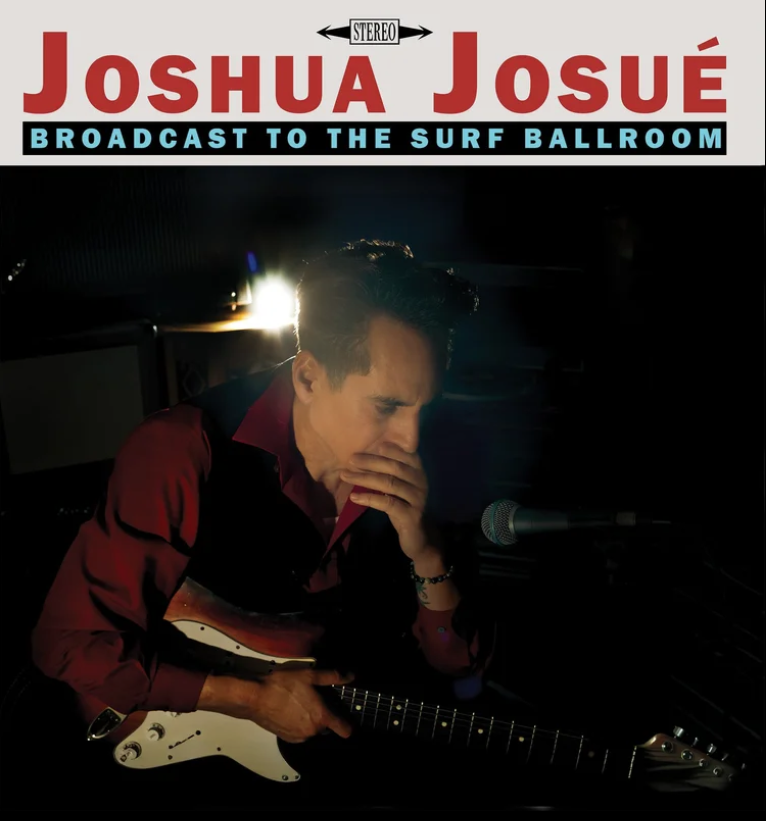
Joshua Josué celebrates both pioneers on his Broadcast to the Surf Ballroom, a 10-track set that finds him performing some of their best known songs alongside several of their demos and works-in-progress, which he’s fleshed out with new verses and arrangements. It’s a wonderful celebration of what could’ve and should’ve been.
The fun kicks off with Valens’ “Let’s Rock ’n’ Roll,” which sports a nostalgic vibe—and some fiery guitars. “What to Do” recasts a Holly demo into a catchy Beatles-like tune that’s truly the toppermost of the poppermost. “Now That You’re Gone” expands Valens’ original idea, found on his posthumous Ritchie album, turning it into a dramatic tour de force. Holly’s “Wishing,” which he wrote for the Everly Brothers, is a gem, and works well as a lead-in for “Oh Selena,” written by Josué, Matthew James Sasser and Eddie Paraza Garzon as a tribute to both Valens and Selena.
“Well… Alright” sows the classic Holly song into a gentle psychedelic piece worthy of the Grateful Dead, while “Learning the Game” captures the spirit of Holly’s demo. Like so much early rock ’n’ roll, Valens’ “The Paddi-Wack Song”—which Josué discovered via the La Bamba movie—is fun personified. “That Makes It Tough” adds heft to Holly’s original demo while maintaining its Fats Domino feel. The album closes with a spirited rendition of Valens’ “La Bamba” that’s sure to have you singing along.
Josué, who also works as a photographer and videographer, applies the same care and focus to the songs as he does his pictures and videos, framing each into a captivating vignette that both pays homage to and extends the original renditions. Whether one first discovered Holly and Valens long ago, as I did, or is a relatively recent convert, Broadcast to the Surf Ballroom is well worth a listen.
 The Old Grey Cat