We live in tense times. We wake to headlines beyond comprehension and end the day to the same, always fearful of what the latest news will bring. Worse, deep within the recesses of our collective mind, we’re cognizant of an unsettling fact: It could have been avoided. A semblance of normalcy was a viable option when we, as a people, chose this nutty path. If only, if only—am I right?
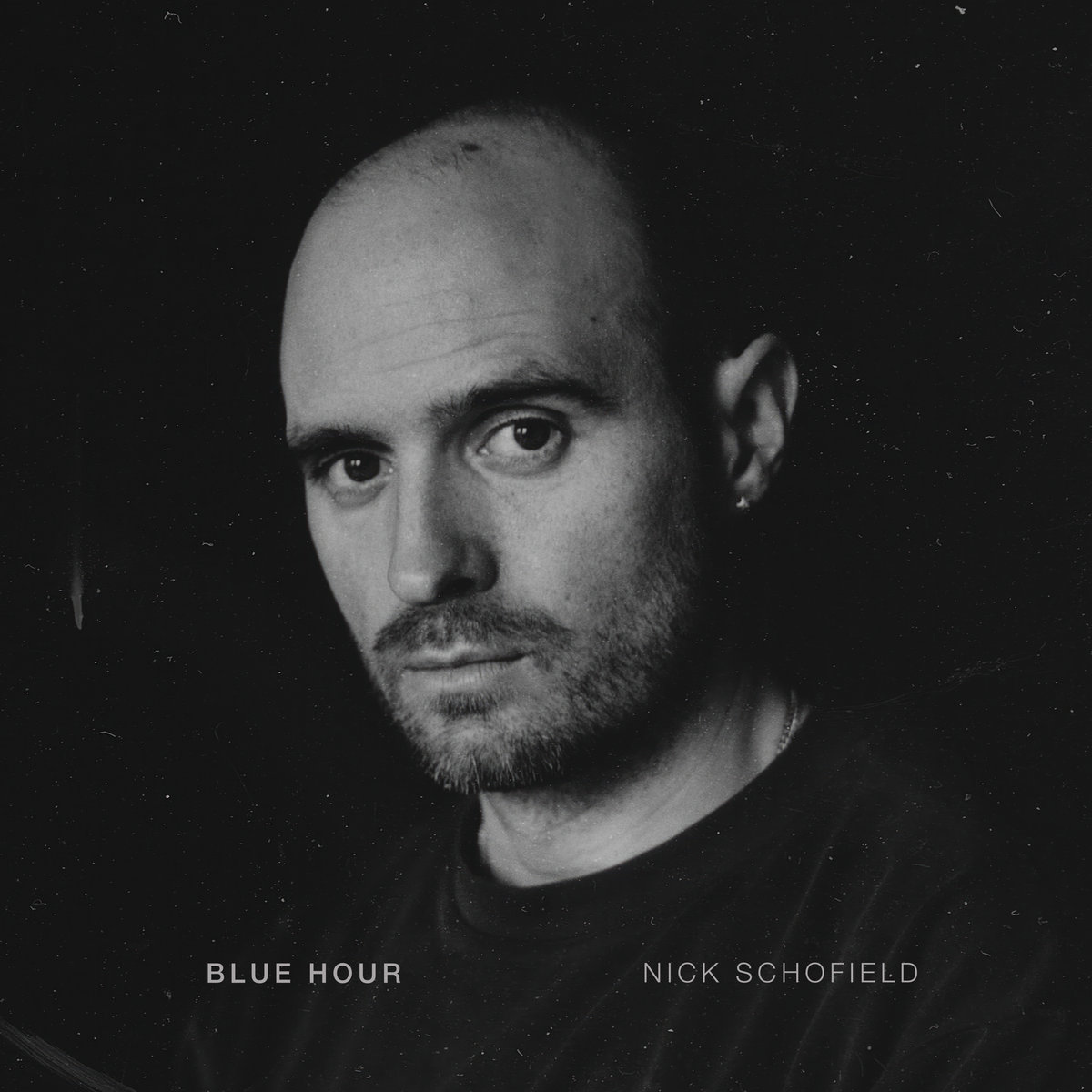
Nick Schofield’s Blue Hour is a welcome respite from the ongoing madness, however. It’s a synth-laden dream state, with figurative electrodes attached to the scalp imparting just enough energy to keep nightmares at bay.
Schofield, who grew up playing the drums, embraced an experimental-electronic path while studying Electroacoustics at Concordia University. Here, he creates an ambient answer to one of his favorite albums, Miles Davis’ 1969 foray into jazz fusion, In A Silent Way. I am not well-versed on either Davis or that album so won’t delve into whether Schofield achieves his aim—but I can say that, whatever his intent, the result is a luminous listening experience. It’s essentially a 40-minute (addictive) excursion into serenity.
The album consists of 10 tracks that Schofield recorded in an Ottawa church. He laid down the synth sketches and drum parts over the course of a day, adding color to the aural landscapes at later dates—including some sublime trumpet work by Scott Bevins (aka No Cosmos). “Sky Cafe,” released as a single a few months ago, is a good example.
Bevins, it should be noted, improvised his parts without having heard the songs before. His horn essentially floats through the ether, guiding us into the light. I’ve found the album to be a perfect nightcap to stressful days, reminding me at times of Vangelis’ atmospheric Antartica (or, to be precise, my memory of it). Blue Hour is laidback and mellow, leaving you feeling as if you’re floating in a sea of calm. It’s stress-reduction set to song, in other words, and stress-reduction is something many of us are in need these days.
 The Old Grey Cat