Gentrification issues are not unique to any one city, granted, but since the tech boom of the 1990s, the City by the Bay has undergone a drastic metamorphosis that’s left the middle- and lower-classes scrounging for scraps.
If you’re going to San Francisco, in other words, forget wearing flowers in your hair—bring a flush wallet instead. Consider these stats: The average house sold for $1.4 million in October 2023, while the average rent is $3,336. That’s not to say affordable housing can’t be found—the Nob Hill and Tenderloin neighborhoods are said to have (relatively) affordable apartments—especially if you’re cool with a studio. But to give an idea of the overall costs associated with the city: CBS News reported earlier this year that residents who make less than $104,000 a year are now considered poor.
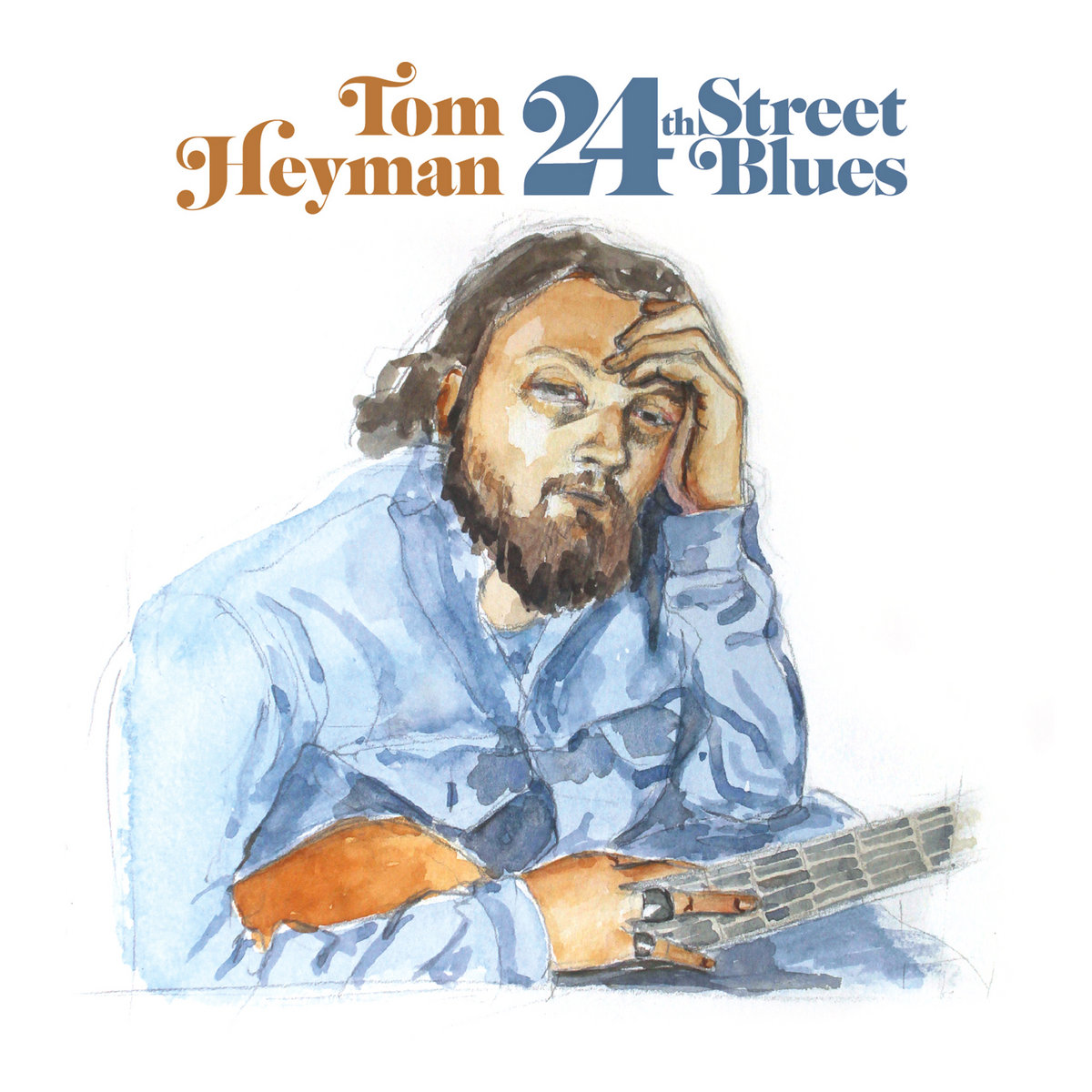
Singer-songwriter Tom Heyman, the one-time Go to Blazes guitarist who left Philadelphia for the Bay Area in 1998, has witnessed the changes within the city’s historic Mission District from up-close, as that’s where he’s lived with his wife for the past two decades. 24th Street Blues focuses on the neighborhood, coming across something akin to Sherwood Anderson’s collection of interlocked short stories, Winesburg, Ohio, but grittier.
In essence, it’s a modern folk album with some Americana and rock flourishes. The opening track, the title tune, tells of morning in the Mission, when a homeless camp beneath a freeway ramp scatters due to a coming sweep. It’s a now normal scene that’s played out in cities large and small, as is this one: “Now scaffolds rise and buildings fall/stop to count the cranes on the horizon.” That construction won’t benefit those who need it most, however, just the wealthy elite.
“Desperate” turns the lens on Heyman himself, reflecting on how he once hated being alone and, as a result, sought something that he can’t quite put into words: “I could feel it just beyond my outstretched hands/against my fingers like the finest grains of sand.” “Barbara Jean” is a character study about a woman who puts her dreams on hold when her father falls ill, returning home to care for him—the kind of story that’s rarely shared, these days. “Sonny Jim,” the next track, could well be about her long-lost sibling; he “woke from a dream one day and everything was gone.” “Hidden History” gives a modern spin to an outlaw’s tale, though this ex-con still longs for his first love. All three characters could well be city denizens that Heyman passes in the street.

“The Mission on Fire” returns to the album’s overt theme, this time recounting what sounds like controlled burns of the district’s buildings that, in the long run, enrich a few while impoverishing the many. “Quit Pretending” could well be directed at the politicians who claim to speak for the many but ultimately sign off on the “progress” only wanted by the same few.
In “Like a Lion,” Heyman recounts what, in part, spurred him his leave his East Coast roots behind: “I headed west to leave myself behind/It’s a tricky thing to slip the ties that bind.” But as he’s grown older, he sees that past—and the present, for that matter—in a different light: “Now all that’s certain fades away/All I see are shades of gray.” “Searching for the Holy Ghost” puts some of what he’s learned into practice, sharing the insight that it’s human connection that matters most in life. Those bonds, however, aren’t always available when one’s struggling to get by, as “White Econoline” recounts. And what ultimately happens when those same connections fall to the wayside? In “That Tender Touch, Heyman steps into the shoes of the down and out, and how “it’s a stone-cold wonder to feel anything at all.” But being alone, in a perverse way, has an upside: “It’s a comfort knowing that there’s no one left/to catch me when I fall.”
The album concludes with “Desperate (redux),” which drives home the notion that he’s still seeking something he can’t articulate—though we know, from the songs that came before, what that something is.
24 Street Blues is both an easy and uneasy listen. It’s easy because Heyman, though once a sideman guitarist, has a remarkably effective vocal delivery and the songs themselves are well-constructed, eminently hummable all. The unease comes from the artful treatises themselves, as the lyrics offer an unflinching—but sympathetic—view of the Mission and its people. It’s a remarkable album that I highly recommend, in other words. It’ll make you think.
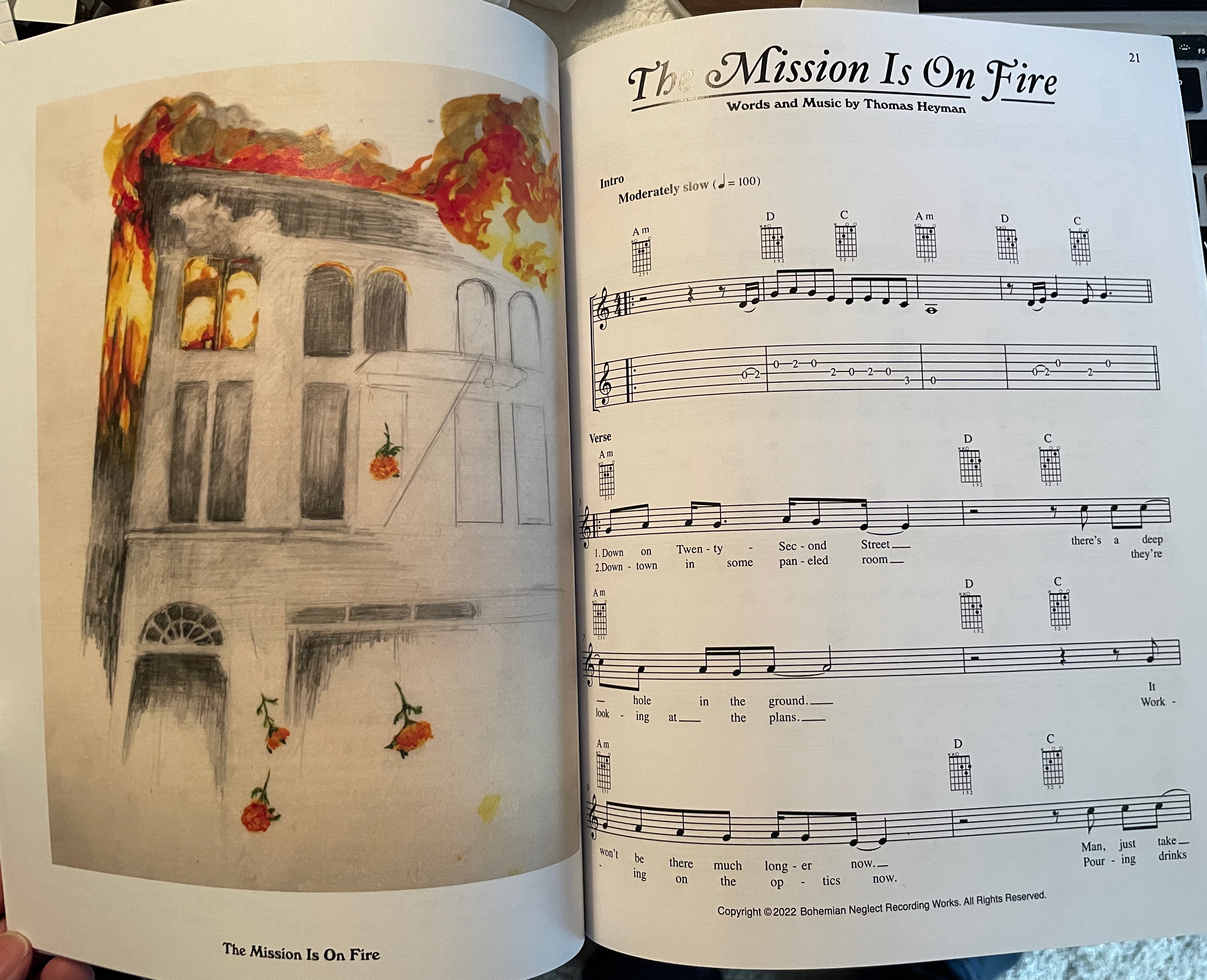
An illustrated songbook is also available (via Bandcamp). It features wonderful artwork by Heyman’s wife, the artist Deirdre White, as well as all the lyrics and music. Even if, like me, you don’t play an instrument, it’s well worth the asking price.
 The Old Grey Cat
Check real estate in Hawaii, as well…where no one (essentially) gets paid a living wage.
LikeLiked by 1 person
Also, the blog wouldn’t accept my like click…must’ve checked my credit rating…
LikeLike