The 2000s were a paradigm-shifting decade. Within a span of just a few years, while we sped along a pothole-ridden highway, the neon ‘90s became little more than a burnt-out billboard in our collective rearview mirror. One seismic jolt followed the next as we drove on, throwing off our tire alignment and shredding our shocks and struts, too.
At the start of the decade, to choose one example not at random, some 2 1/2 billion CDs were sold around the world; it was fairly common, back then, for also-ran artists to rack up gold and platinum awards on the strength of one catchy song. By 2009, however, sales dropped by 60 percent! The reasons were many and varied. On the one hand, it was similar to the sales slump of the late 1970s, which was fueled by shifting demographics, rising prices and, too, a stale music scene. On the other hand, such file-sharing platforms as Napster and LimeWire enabled fans to (illegally) download just the catchy songs instead of buying full-length—and decidedly pricey—compact discs. (One might argue that, at least in the U.S., the death of the single killed sales.) As documented by a slew of journalists, including Steve Knopper (Appetite for Self-Destruction: The Spectacular Crash of the Record Industry in the Digital Age) and Greg Kot (Ripped: How the Wired Generation Revolutionized Music), the music industry initially failed to recognize the dangers of the digital world and then, once it did, failed to self-correct.
There’s far more to that story, of course, and I share it to basically to preface this: the music industry was in free fall. Yet, despite everything, great music was still being made, though not all of it found the audience it deserved. Juliana Hatfield, for instance, was on a creative roll that decade, releasing a string of great albums and EPs. Most fans can recite the titles: Beautiful Creature, Total System Failure, In Exile Deo, Made in China, Sitting in a Tree, How to Walk Away, plus the Some Girls’ Feel It and Blake Babies’ God Bless The Blake Babies and Epilogue.
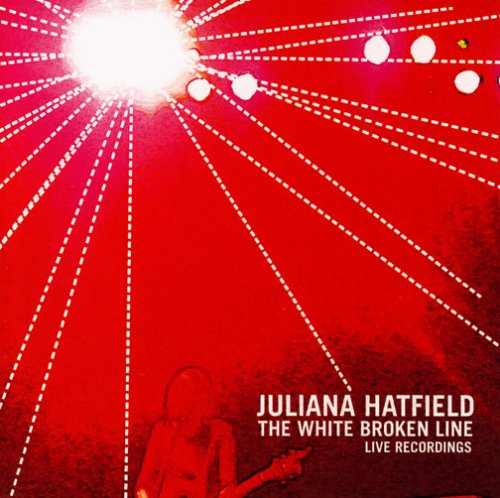
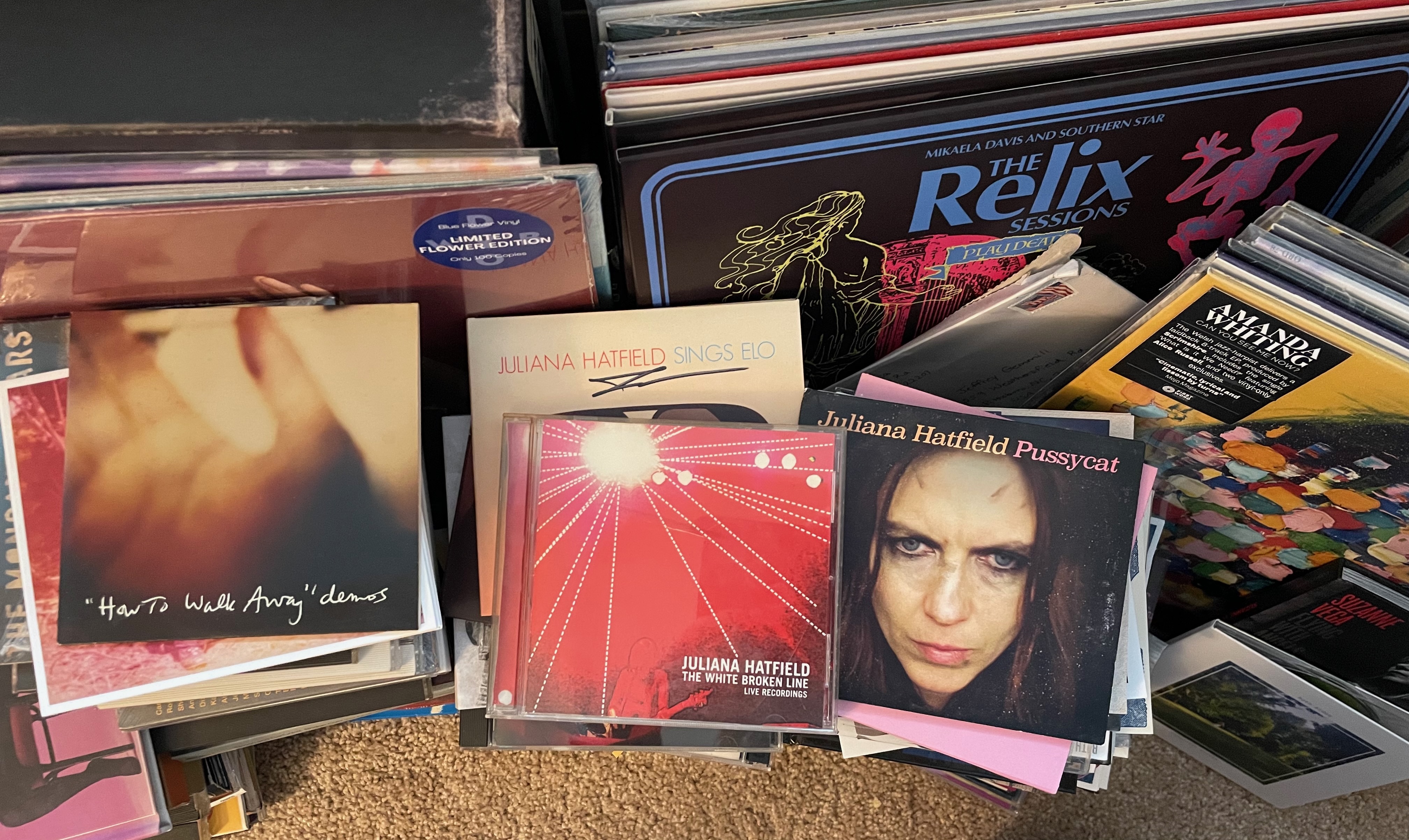
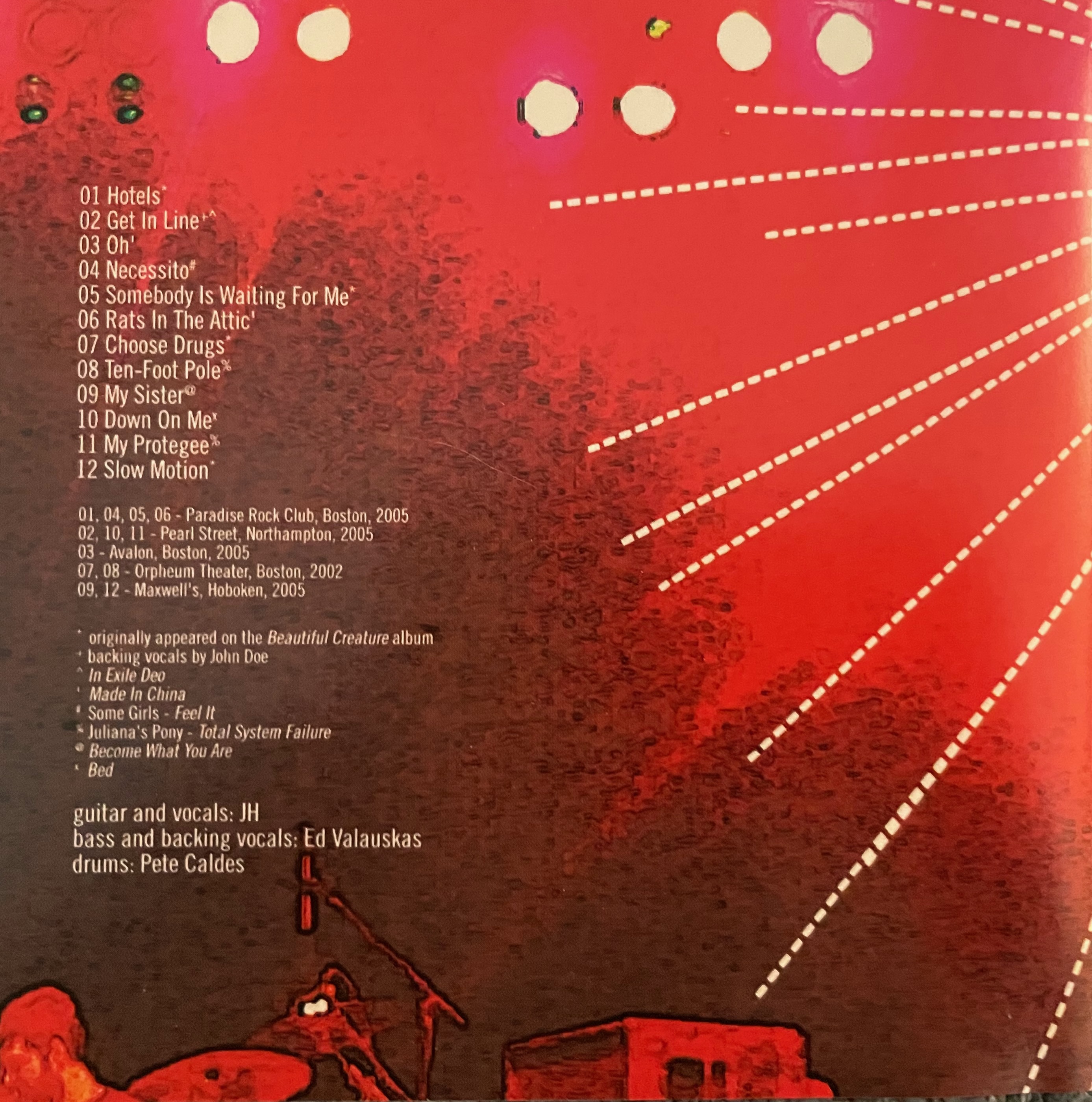
The White Broken Line: Live Recordings is another. It’s not an album most fans think about, at least at first, but it’s one that I’ve played on a fairly regular basis since it entered my collection in late 2006. Initially released in limited form on her Ye Olde Records label on November 21 of that year, and reissued in ‘07, the 12-track/13-song live set is a tasty buffet of her best post-Atlantic work. Aside from “My Sister,” which topped Billboard’s Modern Rock Tracks chart in September 1993, the songs are culled from her then-recent works, including 1998’s Bed. Recorded at mostly Boston-area venues from 2002 to ’05, it’s a raw and ragged outing, with moments of brutal grace followed by acoustic transcendence. She handles guitar, of course, while Ed Valauskas plucks the bass and Pete Caldes thumps the drums. X’s John Doe also contributes backup vocals on “Get in Line.”
The album opens with the gentle “Hotels,” no doubt inspired by the transitory nature of the touring life. Yet it’s about much more than that: “There’s no ever after/There’s only in between.” Her muted guitar solo at song’s end is a thing of wonder, just as the electric fury she reaches in the next song, “Get in Line,” blows the mind. Her whimsical cynicism about a relationship is on full display, too: “It doesn’t really matter anyway/One more time/We’re all gonna die someday/It’s the one sure thing/With a question mark for an answer/Everybody sing/My feeling for you endures like cancer.” “Oh” and “Necessito” amp up things up; as elsewhere on the album, the songs sound like she’s fronting Crazy Horse.
The yearning “Somebody Is Waiting for Me” is both potent and sublime, while “Rats in the Attic” ups the Crazy Horse-like vibe; it’s ragged glory at its best. The delicate “Choose Drugs,” which follows, digs into the vermin that is drugs; to continue with my Neil Young allusions, it’s her “The Needle and the Damage Done.” “Ten-Foot Pole” finds her stepping into the shoes of…a corpse?! Whatever. The sweet (and chorus-free) “My Sister” is likely the song casual fans know her for; it’s a charming remembrance of her older brother’s girlfriend who did, in fact, take her to a Del Fuegos and Violent Femmes concert in the early 1980s.
Her self-deprecating “Down on Me,” a key track from Bed, adds some bitter to the sweet, while “My Protogee” ups both the electric—and cynical—quotients yet again. The album ends with two of my favorite songs: the hypnotic “Slow Motion,” which all but stops time, and—included as a hidden track—the touching and black-humored “Because We Love You.”
In short, at least to my ears, The White Broken Line: Live Recordings makes a great case that Juliana Hatfield is one of the best of her (and my) oft-overlooked generation. It’s an endearing set accented by black humor, cynicism, and optimism. It’s well worth seeking out.
 The Old Grey Cat
One thought