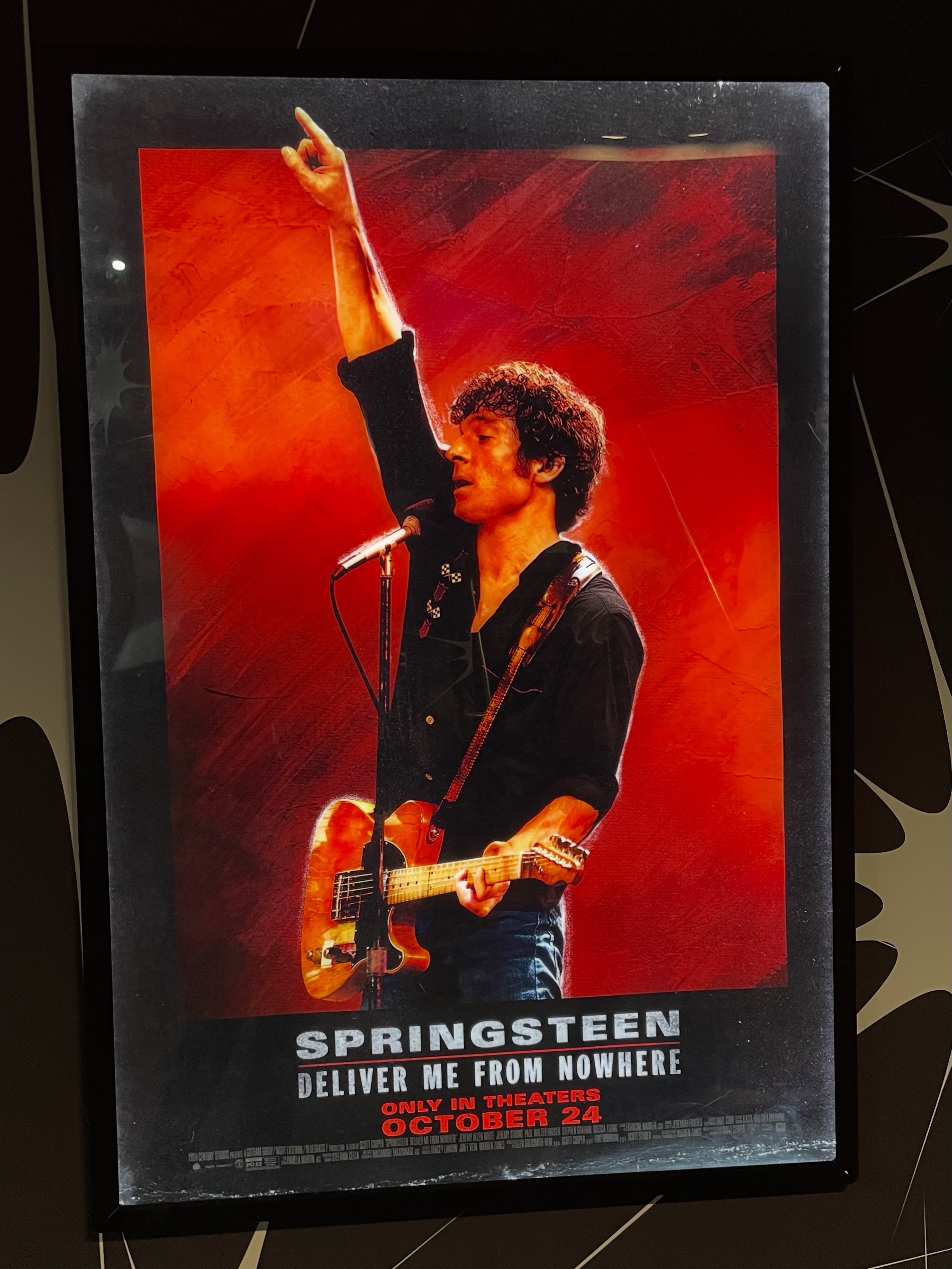
The stories we embrace and reject, the lore we love and hate, are much on my mind, these days. Archetypes, symbolism, and metaphors inform our fables, which often inflate life lessons with a grandeur beyond the events that fueled them—right and wrong becomes good and evil, angels and demons, and the like. To borrow a quote from Joseph Campbell, “Myth is much more important and true than history. History is just journalism and you know how reliable that is.” From tall tales to popular fiction to movies to music, the allegories loom large. We may not see ourselves in the characters as they play out on the page or screen or song, but we identify with them all the same.
Yesterday, I stepped into a cinema for the first time since October 2019, when we took in Bruce Springsteen’s Western Stars concert film. The reason: Springsteen: Deliver Me From Nowhere, about the making of his austere Nebraska album, which he recorded on a four-track cassette machine. It’s interesting yet flawed, more bio-noir than biopic, with its biggest hurdle being how to portray the debilitating depression that enveloped Springsteen at the time. (Stasis doesn’t make for a scintillating visual, after all.) Likewise, the troubles encountered when transferring Springsteen’s cassette recording to vinyl aren’t exactly a logistics thrill to watch (though tech heads may disagree). Those issues aside, Jeremy Allen White captures the essence of the off-stage Boss, while Jeremy Strong as his manager/pal/confessor Jon Landau conveys the frustrated allegiance any manager would feel when faced with what they fear is commercial suicide. Odessa Young as Faye, a composite character who represents several of his real-life girlfriends, is terrific, too.
The film captures the flavor of Nebraska, I think. It’s moody and downbeat, bleak, with only occasional glimmers of hope cracking through the dark clouds. To that end, this past weekend—like many other fans—I found myself listening to the Nebraska ’82: Expanded Edition box set, which was released on Friday. The first disc features a demo of “Born in the USA” and a slew of outtakes, including a few that were never bootlegged, plus a b-side (“The Big Payback”). The second disc contains the much-fabled “electric” Nebraska, with the E Street Band doing justice to most songs. One understands why Springsteen ultimately rejected those versions, however; they inject too much color into what are, at heart, noir-flavored songs. They live in the shadows, not light. The third disc finds him revisiting the songs via a solo performance recorded earlier this year, while the final disc presents the original album.
At the time of its release, the album was both heralded and derided, with some critics praising its lo-fi sound and others slamming the same. The songs, too, received thumbs up and down, with the latter mostly due to recycled lyrics and themes. Most criticisms have faded, however; it’s now routinely included in best-of lists for both its decade of origin, the 1980s, and of all-time, most recently placing 150 on Rolling Stone’s 2020 list of history’s 500 greatest albums. Some fans, aka those who get off on big guitars and saucy beats, won’t enjoy three-fourths of the set (and even parts of the “electric” portion). Others will hear it a-new thanks to the movie, while the hardcore will appreciate it from start to end. It spurs what I jokingly call “deep thoughts.”
Much has been written about Bruce Springsteen with and without the E Street Band—including by me. His songs are Americana in the original meaning of the word (i.e., not the music genre), portraying and puncturing the realities and dreams of life as played out on endless highways, in big cities, small towns, and the purgatory of suburbia that lies between. What struck me yesterday, during the scene when Faye encourages Springsteen to face up to his fears, is that the movie strips the myth from the man to present him as he was, broken, and not the heroic figure we imagine our rock stars to be. In that respect, Campbell was wrong; history is as important as the stories we create to process it, if not more so. Deliver Me From Nowhere deconstructs the legend and makes the art even more profound.
 The Old Grey Cat
One thought