I’m a bit like Billy Pilgrim, forever unstuck in time. This weekend, I hurtled through the past and present—and peeked into the future, too. We flew up the highways and byways to Philadelphia to witness Bruce Springsteen and his mighty E Street Band make a compelling stand against the “corrupt, incompetent, racist, reckless, and treasonous” Trump administration—and also to catch up with old friends and our second family. The two kids I babysat while their mother and Diane ran out to do errands are now—and this astounds me—adults. One’s a mom to three, while the other is newly married.
How can it be? Truth be told, most days I still feel like the 20-year-old English major preparing for a Sunday morning stint on his college radio station’s Folk Show, which—though not a hit with students, attracted a sizable audience of working professionals, including college professors. I’ve said this before, but it’s worth repeating: I signed up for the folk gig because it was the only one available; all the other shows were filled by returning talent. While I had expansive (some might say “eccentric”) tastes even then, my understanding of folk music was an admitted blind spot. It began with Bob Dylan, included Peter, Paul & Mary (who I’d met at a Walter Mondale rally the year before), and ended with folk-rock, a favorite genre of mine that wasn’t exactly considered hip in the mid-1980s. Bluegrass was primarily Flatt & Scruggs, who I knew best from their guest spots on The Beverly Hillbillies.
As a result, I learned as I went, taking advice from friendly Folk Show overlord Jerry and fellow deejays, several of whom were diehard folkies (and grad students), but also following my gut. The Fast Folk Musical Magazine, for instance, quickly became a touchstone LP series, one that I still return to—via Apple Music—every so often. In addition to the folky singer-songwriters I discovered along the way, the high lonesome sound that is bluegrass music resonated with me in ways that, try as I might, I still can’t explain. Looking back, however, I’m positive that being a neophyte Emmylou Harris fan played a role—especially her bluegrass-flavored Roses in the Snow, which I’d picked up on cassette that summer.
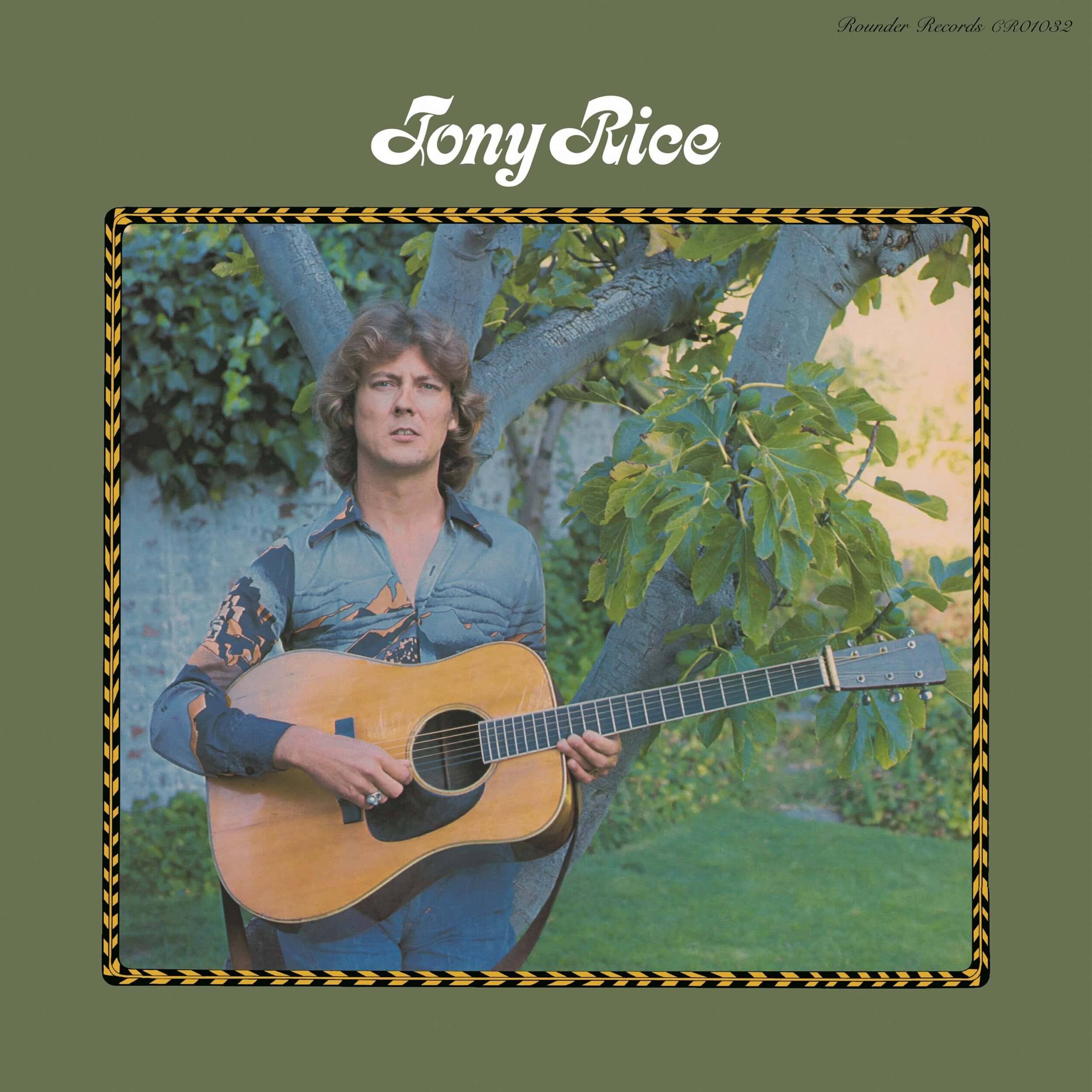
One album that I came across in the station’s record library: Tony Rice’s Church Street Blues (1983). I’m not sure if I stumbled upon it on my own, recognizing his name from those listed on Roses in the Snow, or if Jerry or another deejay mentioned it during one of our monthly staff meetings. But one LP led to the next, and in time that meant Rice’s eponymous set from 1977, which is being reissued by Craft Recordings after a lengthy out-of-print stint this Friday, wound up on one of the two record players in the deejay booth.
I should back up for a moment to state what may be obvious to some but not so much to others: Rice, who passed away in 2020 at the age of 69, is a legendary figure within the worlds of modern bluegrass and folk music, having shaped the generations of guitarists who followed in his wake. He played alongside such stalwarts as J.D. Crowe, David Grisman, Jerry Garcia, and Chris Hillman, plus provided session support to Emmylou, Bela Fleck, Mary Chapin Carpenter, Sierra Hull, and plenty more. He was inducted into the International Bluegrass Music Hall of Fame in 2013, with his influence resonating to present day. Molly Tuttle, for instance, calls him one of her primary guitar heroes in this fun YouTube tutorial.
The self-titled gem from 1977—his third solo album—was originally released on Rounder Records. It’s simultaneously laidback and enthralling, the kind of album that back in the day was a must buy for fans of both traditional and progressive bluegrass. To quote from critic David McCarty’s review in the Indianapolis News that July, “If you buy only one bluegrass record this year, buy this one.” McCarty also noted that Rice’s “speed and control are amazing as he rips through the hardest chromatic passages with ease”; he further observed, “If you you enjoy dazzling lead guitar work, this album is overflowing with hot licks and tight, ensemble harmonizing. If you like a singer who has a way of putting emotion into the songs he sings, listen to ‘Don’t Give Your Heart to a Rambler’ and hear how Rice starts the vocals with drive and soul.” Supporting him throughout are Crowe (banjo), David Grisman (mandolin), brother Larry Rice (mandolin), Jerry Douglas (dobro), plus David Anger (violin), Richard Greene (violin), and Todd Phillips (bass). It’s a true ensemble work, with Rice passing the spotlight to his fellow players, and a joy from start to end.
The reissue isn’t a straight re-release, however. Sourced from the original tapes, it boasts an all-analog remaster by Cohearent Audio’s Kevin Gray as well as the LP’s original artwork. For the vinyl adverse, it will be available to stream from the usual suspects in both standard and hi-res audio. Whatever one’s preference, I heartily recommend it. Bluegrass and folk fans in their 20s, 30s and 40s will hear one of their heroes’ heroes, while the old will undoubtedly flashback to the days that used to be.
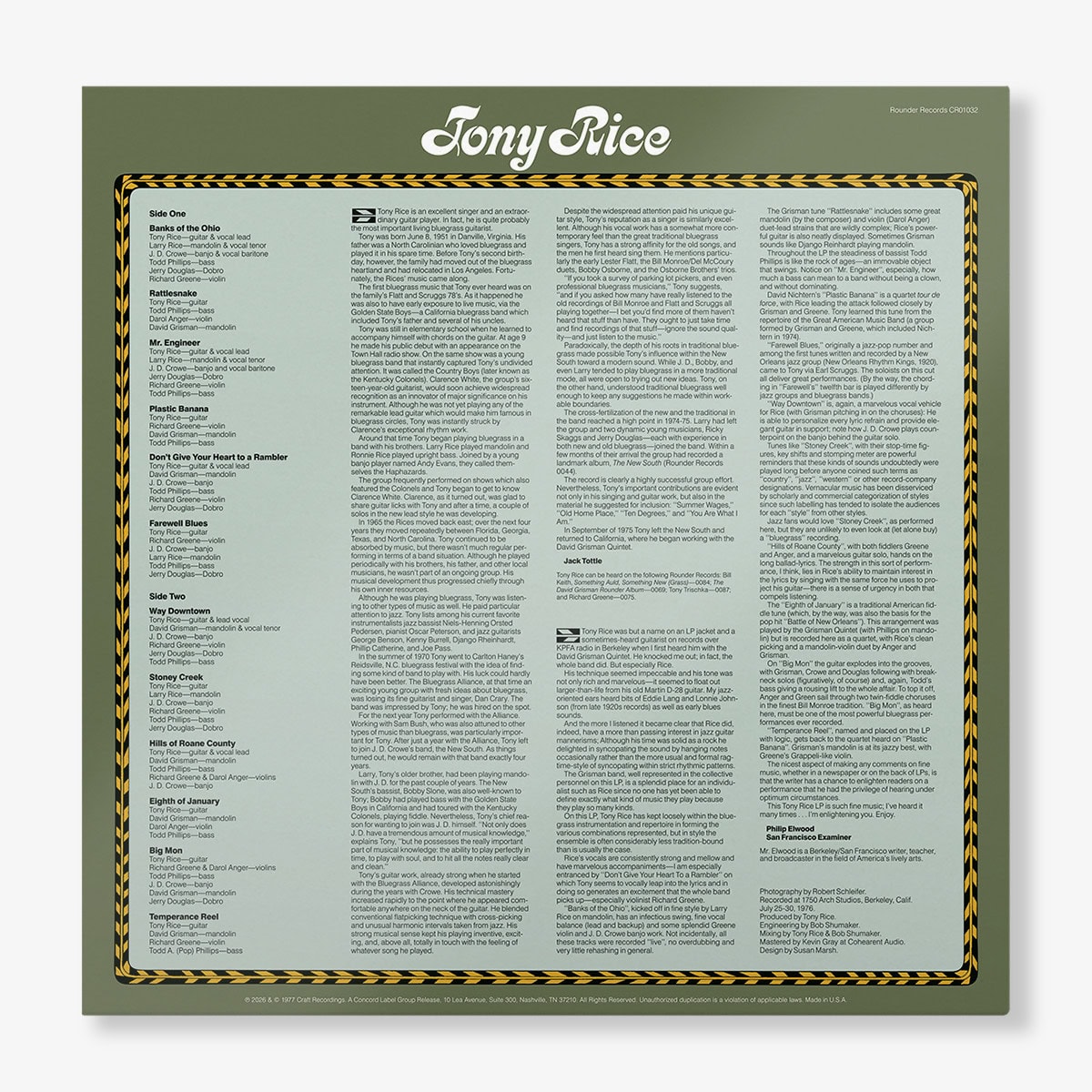
The LP can be pre-ordered/purchased from the Craft Recordings website, while a high-res download (24-bit, 192kHz) of the album can be bought at Bandcamp.


I’ve been Away from the music enough that you had me worrying whether Rounder was now defunct…it’s still in someone’s hands: https://rounder.com/?srsltid=AfmBOoo_404ZQyFqLCdk09uYZpTlr8pG9yCWv_midTYCgQlg-e4nScbr
While the original SWEET FREEDOM was a radio show Donna Wilson and I initially did together at WGMU-AM at George Mason U (in Faifax, VA, in the DC burbs), with Donna choosing most of the punk and me doing mostly jazz/third stream, but ranging as far afield as folk and 20th C classical (still the current century in the latter ’80s), the DC area had and still does the bluegrass and folk major public radio station WAMU-FM at American U, so our little piece of aural turf didn’t have to do much remedial work thus.
Thanks for the reminder of Rice and his work, and pointers to some of that.
WETA-FM is the DC NPR/Classical station–a commercial classical station ran for decades until 2007, WGMS–“Good Music Station”; WDCU-FM at the University of DC was the primarily jazz station rill it was sold to C-SPAN in 1997, just after I moved to the Philly area–the 7s were hard on non-pop/news radio in DC–while the Pacifica station WPFW and WAMU had some jazz programming.
LikeLike
And I see that in 2016, the bluegrass/folk music Internet station that had been created severed from WAMU formally: https://bluegrasscountry.org/about/history-of-bluegrass-on-wamu-bluegrass-country/
LikeLike