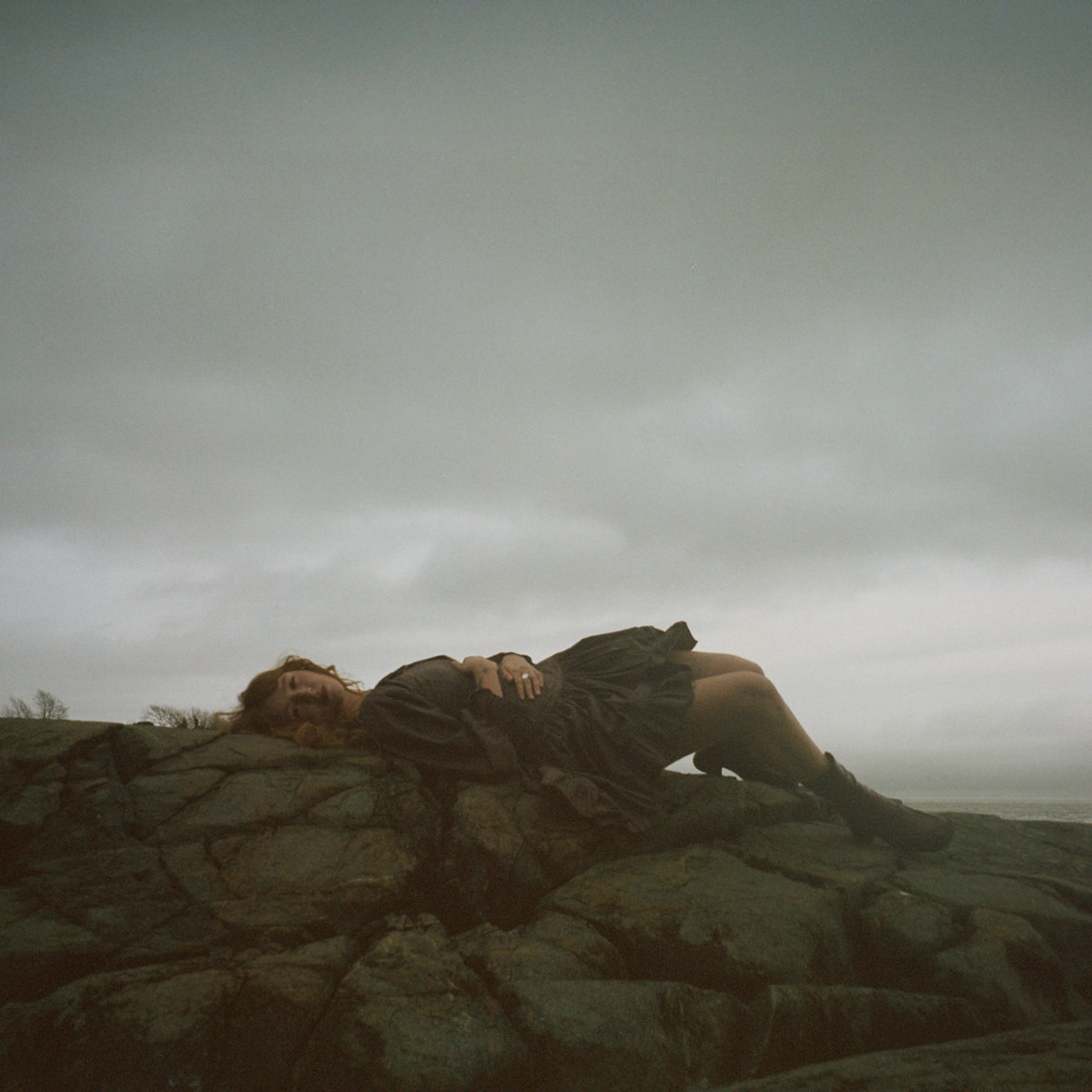
Breathe in. Breathe out. Inhale again, this time through the nose, and exhale slowly through the mouth. And again. Concentrate on the rise and fall of your chest, the rhythm of your breath, the absence of cluttered thought: Listening to the tuneful twang of Bella White’s laconic drawl on A Sign in the Weather, the way her voice swirls, twirls and somersaults across the syllables, is akin to that. It’s mindful meditation set to song, just about. It’s hypnotic.
The music that supports that enchanting drawl is likewise unhurried, with hints of early 1970s Laurel Canyon wafting through the Americana soundscape despite the sessions taking place in, from what I’ve read, a shotgun shack in New Orleans. (Even if not true, the imagery is too damn cinematic not to share—one can almost visualize the condensation streaking down these humid-soaked songs. And I mean that in the best of ways. They’re thick with emotion.) Lyrically, the 11 tracks contemplate the grist of a lived life, from love lost and a new one found to dilemmas of the existential kind. “I ended a relationship as I was starting to write all the songs,” she told People magazine. “Then I moved cities and I just got into a new relationship.” Along the way, she deigned to focus not on the sweeping aspects of the upheavals, but the undertow. “All of my big feelings are made up of a million little feelings,” she explained. “There was a lot of little transitional feelings. I was yearning for something.”
She sings in the opening “Trouble,” about the break with her ex, “There’s no such thing that I’ve ever seen/That could outrun all the trouble that you gave to me.” The upset doesn’t end when they (or you) walk out the door, after all; it hangs around, heavy on the heart, even in the best of breakups. As with the other songs, it’s uncluttered and impressionistic, conveying emotions with bristly brushstrokes that reverberate beyond the grooves. “Little Things,” one of the four teaser tracks I featured over the past many months, follows; as I observed at the time, “It’s an ode to existential angst and stasis, with her lyrics dwelling on the lies we tell ourselves and others ‘because it’s easier hiding what I could not deny.’” “Stuff,” for its part, swings like an Emmylou Harris tune while unpacking that moment when one realizes love, for some, is an impermanent feeling: “Winding down that road/You saw me go and stayed behind/Far away, I told you so/But still you would not change your mind.”
“Dream Song,” another of those teaser tracks, is a delicate breeze of a tune that delves into the fantasies we grant ourselves: “I hoped for a better day, one I wanted to remember with you/You came from so far away or so it seemed and you were in my dreams.” “Better,” on the other hand, finds her ready to move on, while “False Start” ponders whether she’s actually moving on or just, as happens, moving in circles. (As I noted upon its release, “Matters of the heart aren’t always black and white; they often live in the gray—as does this song.”) “Doing Well” possesses a Cajun flair and a self-confidence that surprises her: “I thought that I’d be worse off than I am and I have not been/And I don’t know how to tell you/That I’m doing well.”
“All My Friends” and “Pink Living Room” are miniature marvels both. As I said of the latter last month, and this applies to the album as a whole, it features rudimentary instrumentation, slack drums, and guitars and keyboard that almost matter not. (Key word there: almost.) It’s a deep breath that imprints itself on the soul. The penultimate track, “Two Times,” revisits how a past hurt lingers still, while “Without Making a Sound” serves as an artful—and poetic—encapsulation of all that came before.
My LP—along with a signed placard—is currently in transit, so I’m not sure who plays on what (or if the LP’s jacket even spells that out). But White, who plays guitar, co-produced the album with Ross Farbe, who handles guitar and percussion. Also on hand are drummer Sam Gelband; bassist Gina Leslie; fiddler Patrick M’Gonigle; and pedal steel player Nicholai Shveitser.
In a weird way, however, as I said two paragraphs back, the instrumentation almost matters not. Rather, White’s timeless voice floats to the fore, her quavery delivery transforming from a wispy cirrus cloud to the cottony cumulus kind to, at times, the dark shelf variety that threaten heavy rain—and then back again. One listens as she sings, breathes, and somehow synchronizes with her heart. It’s a remarkable outing, A Sign of the Weather, an impressionistic meditation on heartbreak, heartache, and recovery, and one of the year’s best albums.


2 thoughts