I hit for $3000 on a scratch-off last week. The initial joy proved fleeting, however, due to the banality of today’s tech-driven world—and my own impatience. Yesterday, after returning home from Lottery HQ, I tried to deposit the check into Bank No. 1 via its phone app, but received an error message: the print on the check was unreadable. (The Lottery does, in fact, use a tiny font, so it kinda-sorta made sense to me.) I tried again. Same error. And again. The check, the message said, couldn’t be validated. It’s a regional northern bank, I should mention, so—now that I live 400+ miles south—I can’t easily walk into a local branch and clear up the matter. No worries, I tell myself: I also use another bank, too. Maybe its app works better. And, in fact, Bank No. 2 throws no hissy fit about illegible numbers; the check sails through. All’s well that ends well, right?
Not quite. I woke today to discover that both banks now show the check as having cleared. So I called Bank No. 1, which is clearly at fault, to tell them to kick the money back to the Lottery—but it’s not that simple. The process can take days. I then called the Lottery to explain the situation; as I semi-joked to my wife, I don’t want to use the winnings to pay for a lawyer to clear me of a bunco charge. The woman I spoke with was both bemused and sympathetic at the situation, all while assuring me that I was doing the things I should be doing—but I can’t help but to wonder whether state troopers will show up at my door.
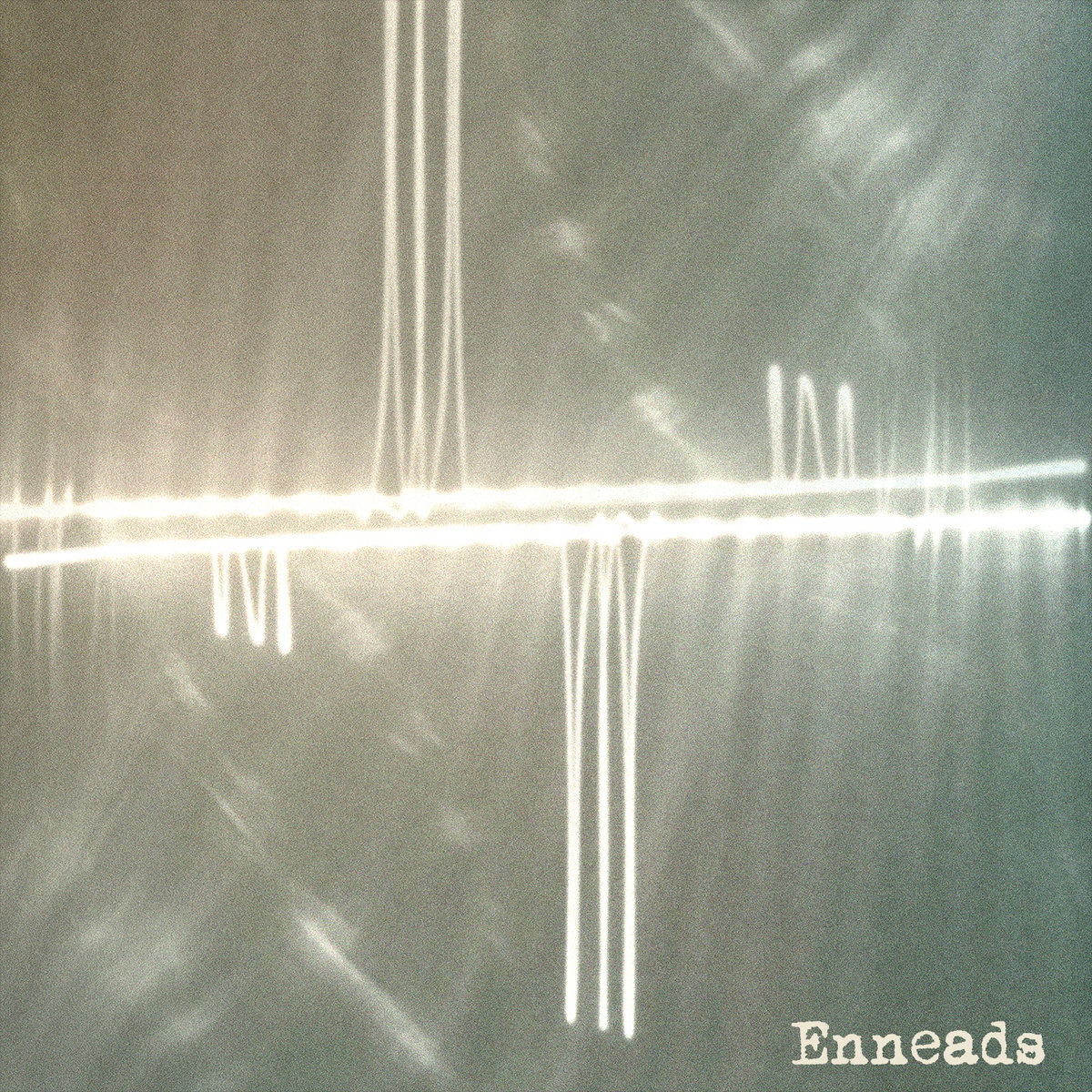
I share that to say this: The self-titled debut from “doom jazz” trio Enneads somehow makes for the perfect soundtrack for this unsettled day—and, too, the topsy-turvy world. It’s low-key yet stormy, possessing an “under toad” worthy of T.S. Garp’s son’s vivid imagination. The group consists of pianist Phyllis Chen, drummer Hamir Atwal, and 17-string bassist Zach Layton; the three recorded the tracks between 2024 and ’26 at Layton’s studio in the Hudson Valley, with the idea behind the project being to bring the ancient Pythagorean idea of harmony to life. (As Google’s AI overview simplifies it, the Pythagoreans subscribed to the notion that “the universe, music, and the human soul are all governed by simple whole-number ratios.”) In practice, that means deep harmonics and oscillating rhythms; the seven tracks unreel much like an overcast day, when intermittent rain is accompanied by faint thunder.
Layton, by the way, studied at New York’s Rensselaer Polytechnic Institute, where he earned a Ph.d, and serves as a music professor at Ramapo College of New Jersey. The press release notes that he researches quantum sonification (i.e., according to Google’s AI explanation, “turning simulations from numerical data, measurements, and quantum physics into sound”), while his website bio says that he “explores how sound functions as a sculptural force: an invisible architecture that shapes perception, memory, and collective experience.” His resonant bass combined with Chen’s amplified piano—run through a distortion pedal—and Atwal’s ever-shifting percussion results in a fascinating listen. It’s part ambient, part jazz, part avant-garde. It’s theory put into practice, to an extent, and a perfect accent for late nights and early mornings.

