In the grandest sense, the ties that bind many of us seem a tad frayed, these days. Anger, rancor and rage drive the daily discourse, with salient commentary pushed to the side. Name a subject, any subject, and it’s all but certain that someone, somewhere, will hijack it, twisting even something as innocuous as the Peanuts cartoon into political propaganda of some kind. Yet, and this I believe, once you tread past the bots and crazed commentators (which are often one and the same), you uncover a cornucopia of commonalities. Respect, empathy—and, of course, art—are the driving force for that.
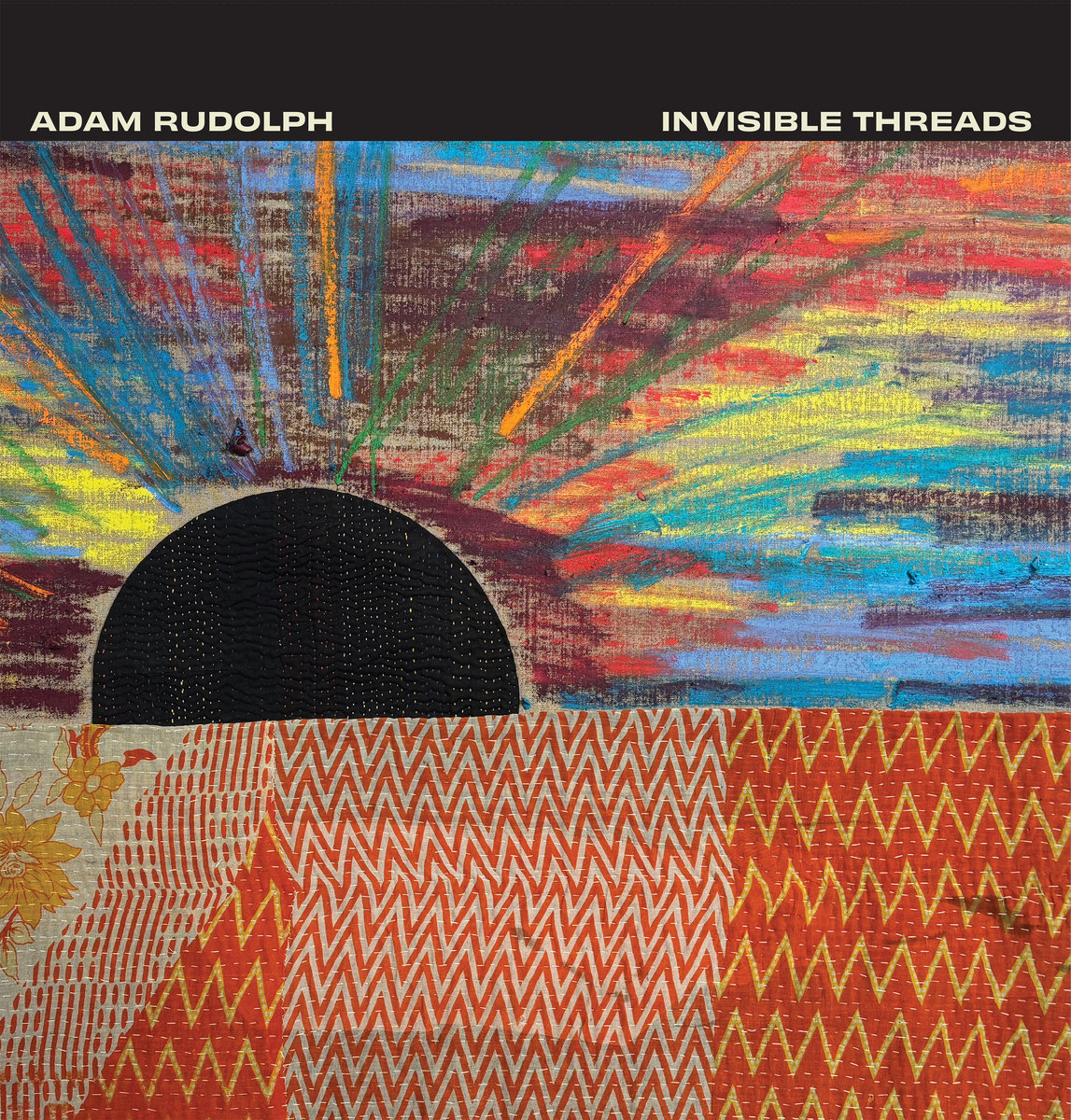
Jazz percussionist-composer Adam Rudolph’s 64th album, Invisible Threads, is a wonderful example. Commissioned by Omni Sound’s Ahmet Uluğ for Istanbul’s Akbank Jazz Festival, which he cofounded in 1990 with his brother Mehmet, the nine-track outing features Rudolph—who handles congas, tarija, glockenspiel, cup gongs, kalimba, udu drums, caxixi, slit drum, 606 drum machine, Mbuti harp, live electronic processing, and percussion—with Istanbul-based musicians Ahmet “Haci” Tekbilek, who plays the traditional Turkish flute known as the ney; percussionist Okay Temiz; violinist Özlem Kaya; flutist Sıla Gerbag; and vocalist Sumru Ağıryürüyen. Also on hand: Italian guitarist Marco Cappelli and Danish bassist Jesper Egelund Pedersen. Together, they weave communal magic from their distinctive strands. (Sadly, Tekbilek—who Rudolph first met in 1978—passed away in early August.)
Rudolph, who helped popularize what’s come to be known as “world music,” explains in the press release, “I wanted to devise a conceptual approach that would integrate the various approaches represented in the ensemble while leaving space for everyone to participate in a meaningful way. Okay is one of the innovators of Turkish jazz. Several of the Turkish and European musicians are more adept in the Western classical tradition. I’m always interested in the conceptual and philosophical elements that give us both unity and diversity. The result achieves that and more. To again borrow a Rudolph quote from the release, and I’m sharing it because it’s true, the result “feels like traveling in inner space. Although this music is absolutely collective, it also has an interior, psychological, mystical quality. It doesn’t come from a place in the world, and it’s not an imaginary place. It’s a place in the psyche, in the inner being of the imagination.”
Although the 43-minute outing features nominal stops and starts, to my ears it plays as if one song. It’s wistful, joyous, and always mesmerizing; Tekbilek’s ney floats like clouds across the sky while the percussion plays like the wind pushing it along.


One thought