“Content creator” is a corporate term coined by those who woefully miss the point of artisans, of painters and sculptors, of wordsmiths. It’s passion, not pursuit; expression, not emulation (or immolation); art, not commodity. The algorithmic beast requires fodder to propagate the illusion of choice, however, and there are those willing to play the game. “Sell out,” the young may be surprised to learn, was once deemed a slur; to co-opt was not divine. Yet the further we’ve hurtled into the 21st century, the more the commercialist quest has been embraced. Don’t get me wrong—most everyone hopes to make a mint from their songs. But the biz wasn’t viewed as a slot machine that gives instant riches; singers and bands first played parties and local bars, learned their craft, and eventually—if they were lucky and talented—wound up as the opening act at a slightly larger venue.
Cranking out “content” on the socials everyday, accruing likes and views, didn’t matter. Record sales and radio play did. Artists generally faded in and out of view, cycling through the magazines and newspapers with every new release or tour before disappearing until next time. Fans, potential or already won, judged not on one-line witticisms and politics, but songs, voice, performance.
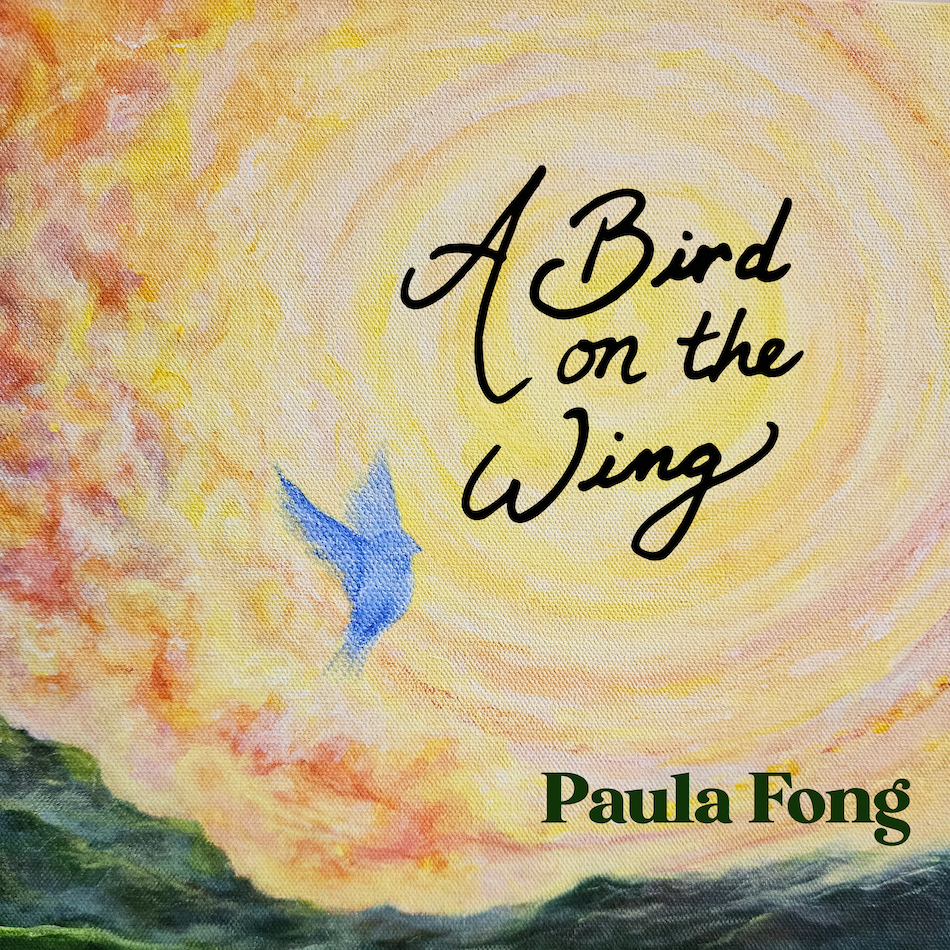
Not sure why that occurred to me this morning. But listening to Paula Fong’s full-length debut, A Bird on the Wing, which is out October 2nd, has been a joy that, as often happens when I fall for a certain sound, leads to what I jokingly call “deep thoughts.” For those not in know: She’s an L.A.-based Americana artist who, despite her tiny stature, possesses a giant-sized voice—the kind that not just envelops the soul, but becomes one with it. The album consists of the five-track acoustic set she released earlier this year, The Bird Acoustic Sessions, with the remaining six songs featuring electric guitar and drums. It’s a tour de force that weaves together distinctive strands into a sonic blanket that’s as colorful as it is comfortable, blending bluegrass, folk, folk-rock, and country into a true Americana sound, albeit one that finds room for a song sung partially in French. She reminds me, at times, of Sarah Jarosz, Tift Merritt and the Rick Roberts-era Flying Burrito Brothers, with light-filled songs that are ocean deep.
“River Run,” one of Acoustic Sessions tracks, kicks things off: “River run run run, till this season is done/Lift my heaviness and lead me down the channel/Ease the pain to which I’ve clung and when the new day is come/We’ll be far away from here.” “Up & Out” extends the theme with a lively arrangement that’s part gospel, part lament. “What Are We Running From” maintains the mood while downshifting the tempo; it conjures the youthful quests many of us undertook, never quite understanding what or who we were running from or to. “Marianne,” released as a single a while back, recalls a friend who danced to her own tune. “Peace of Mind,” meanwhile, delves into the internal and external battles we all face, while “Turn, Turn, Turn” leans on the Book of Ecclesiastes (and Pete Seeger) for understanding and insight. “Pretty Red Bird” expands upon the season motif; it opens with just Fong’s vocals before expanding its wings into a gentle bluegrass number. The breezy “Lessons on Listening,” for its part, is an intricate parable that leans, in part, on the gospel song “Glory, Glory (Since I Laid My Burdens Down).” The title track is a vocal showstopper, as the below video shows, with Fong’s honeyed vocals gliding high on a metaphoric breeze. “Sans dire je t’aime,” sung primarily in French, is another moving song, this one (if my rudimentary French is correct) about giving one’s self over to love after being hurt. Album closer “Goodbyes” contemplates love, death and grief: “Oh goodbyes ain’t ever easy/You grieve ‘em till the grief is past/And the next time they come a callin’/Steel your heart child for the darkness cannot last.”
Fong’s musical journey, it should be noted, began when she became fascinated with Breton folk music while spending summers in France as a child. She’s since navigated a wide variety of styles, from classical music to Chinese opera, before finding a home at the intersection of country, folk, and bluegrass-flavored gospel. (In fact, she serves as the musical director for an Americana music service at Rolling Hills United Methodist in L.A.)

