Whether metaphoric or actual, most mornings I lower the stylus to a vinyl platter and listen once the needle finds the groove. The record spins at a peculiar speed picked by technicians of yore, sound vibrations envelop the room and, suddenly, I’m lost in clouds of thought and emotion, of memories forged in my childhood, teens, twenties, thirties, forties and onward to this year. At its best, music weaves an intricate quilt that patches the present with the past, conjoining the fleeting with that which lasts.
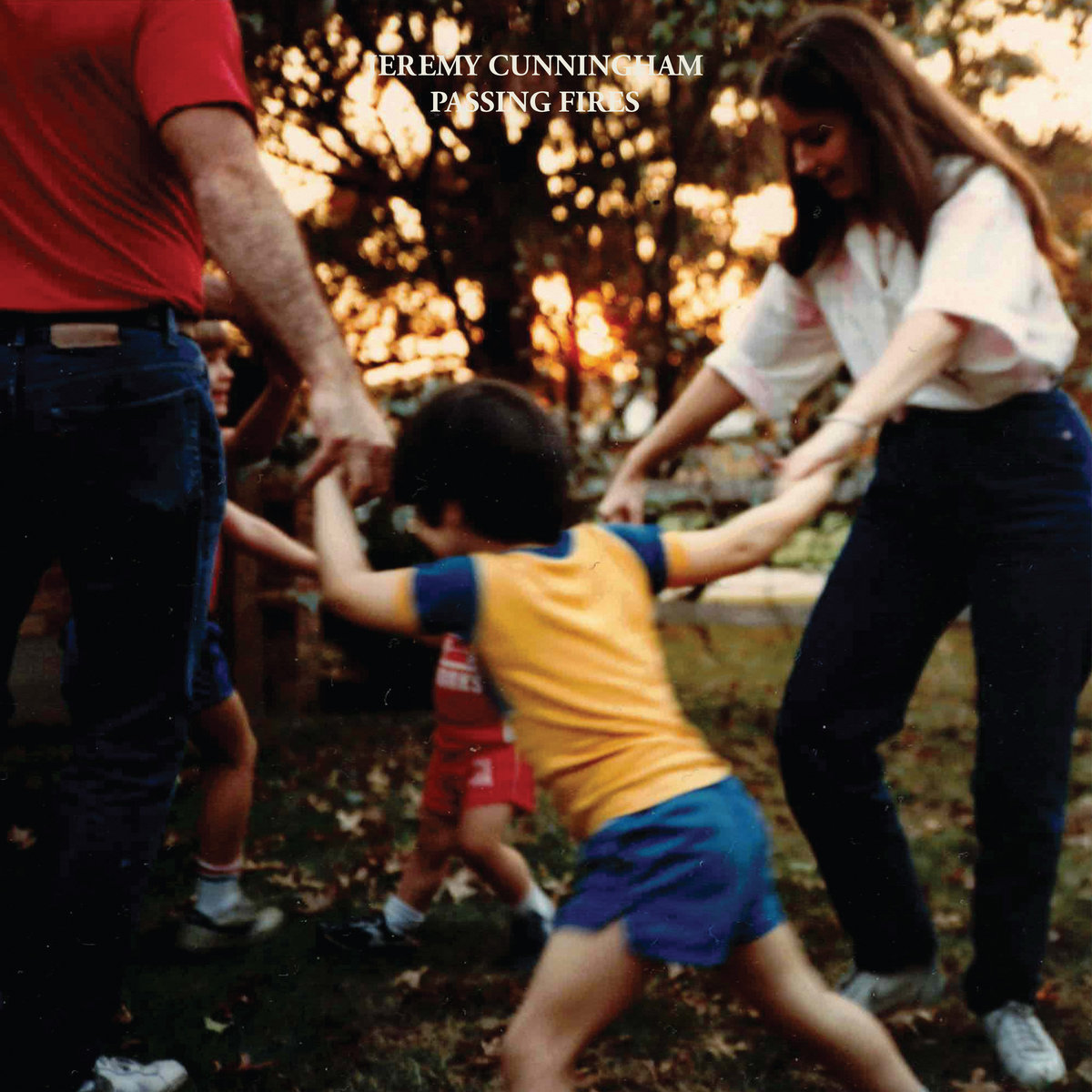
Jeremy Cunningham’s jazz-imbued Passing Fires is the latest example. It’s an amalgamation of traditional and experimental, with ambient elements intertwined with light psychedelia, and the personal with the communal. For instance, the piano-based “Some Days,” about losing his dad during the Covid years, began as a “voice memo” demo he recorded at home; playing it back, he heard his daughter playing in the background and the yin-yang balance somehow fit. (Death and life, sadness and joy, past and future: They are all halves of a whole.) Once ported to the studio, Jeff Parker (guitars, electronics) layered colors on the initial sketch, while Sen Morimoto (vocals, sax) added poetic depth.
The album itself gets underway several tracks earlier, with the brief “Oh, I Don’t Want to Go to School,” first introducing his daughter overtop a brief piano motif. Like the bulk of the tracks that follow, “Union Pier” is a jazzy instrumental that, I’m sure, will conjure a different time and place for every listener. “To the Sky,” for its part, embarks for the clouds; the Brazilian-flavored tune was influenced by Milton Nascimento and Lô Borges, while its production blended the communal with the personal—Makaya McCraven (drums, vibraphone) and Matt Gold (guitar, bass, percussion) helped flesh out Cunningham’s initial idea, with Cunningham then expanding upon the framework on his own.
The jaunty “The Kids Are Asking” reminds me of my ever-upbeat single-digit self, while “Kobi Shobi” echoes my more nuanced teen and young adult years, with guitar giving way to sax and rhythms to melody. “Beyond the Veil” treads into a territory almost everyone steps into at some point, grief, with a bluesy sax blowing forth from the recesses of memory and a guitar-driven gust expanding upon it. The stark “You’ll Still Here,” which follows, is an artful epiphany set to melody, just about, replicating the post-grief realization that the departed stay with us, if only in our hearts, for all our days. I’ll skip the other tracks because, really, my musings matter not; they’re equally transfixing, all. The album closes with “Somewhere to Be,” which—like “To the Sky”—features Morimoto on vocals; his grainy tones color in the grief-tinged lyrics to nice effect.
Cunningham, it should be noted, is a well-respected Chicago-based jazzman; in addition to drums and percussion, he plays piano, keyboards, and synth bass. He’s joined by a coterie of friends that includes—besides those already mentioned—Lane Beckstrom (bass); Paul Bryan (bass, kalimba, mellotron); Josh Johnson (alto saxophone, keyboards, electronics); Lia Kohl (cello); Dustin Laurenzi (tenor saxophone, guitar, synthesizer, electronics); Will Miller (Rhodes, piano); Bob Parlier (percussion); and Greg Uhlmann (guitar). He, Bryan, and Johnson produced.

