Once upon a long ago, when it rode the “Mystery Train” to mass appeal in the 1950s, rock ‘n’ roll represented rebellion. The kids were not alright, but couldn’t explain why. They acted out, lashed out at parents and society writ large, unsure of much beyond their boredom. Elvis thrust them into a frenzy. Chuck Berry, Bo Diddley and Little Richard, too. What were they rebelling against? In the immortal words of Marlon Brando, “Whaddaya got?”
The unformed targets of that wrath morphed within a decade, of course, thanks in part to the influx of folk refugees who, inspired by George Harrison, married the Rickenbacker sound to lyrics more profound than “Be Bop a-Lula” (not that there’s anything wrong with Gene Vincent). The twin pillars of protest during the 1960s were Civil Rights and the Vietnam War, though there was plenty more to speak out against. Rock music, although a burgeoning business, was seen as “counterculture” by many, a home to renegade raconteurs who rejected the mainstream way of life—even though, in fact, most didn’t. They relayed dreams and visions shared by their fans, from finding love to escaping the drudgery of the working life—if only for the night.
Rock music, at its core, challenged (and still challenges) the status quo.
That’s a decidedly imperfect summary, I know, but I start there because rock music is now perceived by many—especially those raised on “classic” rock radio—as entertainment. It’s no longer counterculture. It’s mainstream culture.
And there’s few better examples of it in action than a Bruce Springsteen concert, where thousands upon thousands of fans join together in song and occasional mischief. While his songs primarily explore matters of the heart, soul and working life, the visage presented by his famed E Street Band, especially the prominent placement given Clarence Clemons back in the day, made a statement in and of itself. He also, as most of us know, headlined the MUSE concerts in 1979, rebuffed Ronald Reagan in 84, and campaigned for presidential candidates John Kerry, Barack Obama, Hillary Clinton, Joe Biden and Kamala Harris in the following years. Those who state that he should “stay in his lane,” as some have said since his pointed political comments from his current UK/European tour became known, are ignorant of the road he’s always traveled. (To them I recommend they listen closely to “Badlands,” “The Ghost of Tom Joad” and Magic.)
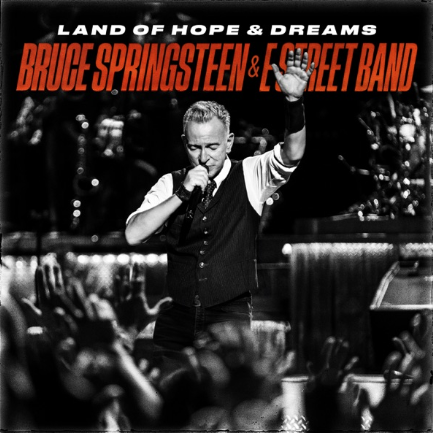
Land of Hope & Dreams, a six-track, four-song EP culled from the tour’s opening night in Manchester, is a remarkable document. In an era when too many musicians and public figures cower in corners, afraid to speak out lest they alienate their fans and corporate overlords, he shows no fear in voicing his concern about the direction “the America I love” is headed. It includes two of his cogent soliloquies as well as “Land of Hope and Dreams,” “Long Walk Home,” “My City of Ruins” and “Chimes of Freedom.” It’s a great taste of the show, which (like many Springsteen concerts) is available to buy in full from nugs.net.
The music itself is as grand as ever, albeit taken at a slightly slower tempo than years long ago. To my ears, “Land of Hope and Dreams,” which he debuted during the E Street Band reunion tour of 1999, features a more pronounced gospel feel, while “Long Walk Home,” a standout from Magic, is as powerful as ever. The prayerful “My City of Ruins,” for its part, widens the song’s original scope, Asbury Park, to include all of America. The EP concludes, as did the show, with his rendition of Bob Dylan’s “Chimes of Freedom,” which he first covered in 1978 and then again, a decade later, during the all-star Human Rights Now! tour. It aches with compassion for the downtrodden among us, including ”the countless confused, accused, misused, strung-out ones an’ worse.”
 The Old Grey Cat
This is an outstanding, inspiring EP, especially his intro to My City of Ruins. It should be required listening for every American.
LikeLiked by 1 person
Agreed.
LikeLiked by 1 person